Get The Latest News, Advice & Best Practice From Blog
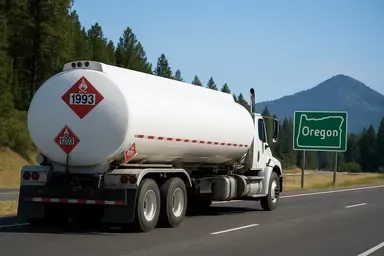
Hazardous Material Transportation Rules in Oregon
Here’s a detailed breakdown of the rules and requirements for transporting hazardous materials in Oregon — covering state laws, driver/carrier responsibilities, key steps, and practical tips.
Oct. 12, 2025, 6:29 p.m.
Read more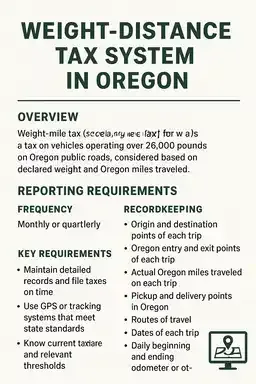
Weight-Distance Tax System and Oregon’s Unique Mileage Reporting Requirements
Here’s a detailed summary of Oregon’s weight-distance tax system (“weight-mile tax”) and its unique mileage-reporting requirements, plus key issues for carriers. If you want, I can also pull together a “how to stay compliant” checklist.
Oct. 11, 2025, 7:26 p.m.
Read more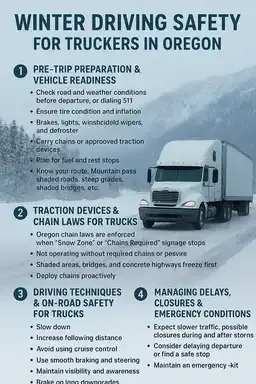
Winter Driving Safety For Trucks In Oregon
When you’re operating a commercial vehicle in Oregon during the winter, the stakes are higher — because of the terrain, variable weather, challenging passes, chain laws, and large-vehicle dynamics. Here’s a detailed breakdown of how to stay safe and compliant.
Oct. 10, 2025, 8:01 p.m.
Read more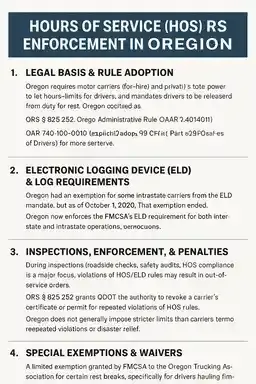
Hours of Service (HOS) Rules Enforcement in Oregon
Here’s a summary of Hours of Service (HOS) Rules Enforcement in Oregon — how Oregon adopts & enforces HOS, what state laws apply, how inspections & penalties work, and what carriers & drivers should watch for.
Oct. 9, 2025, 7:20 p.m.
Read more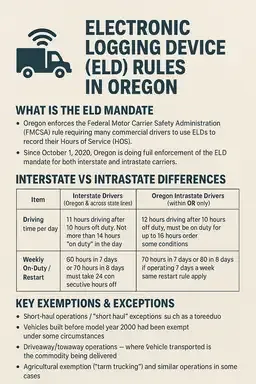
Electronic Logging Device (ELD) Rules In Oregon
Here’s a summary of Electronic Logging Device (ELD) rules in Oregon: what’s required, what’s different for intrastate vs interstate, exemptions, violations, etc.
Oct. 8, 2025, 6:18 p.m.
Read more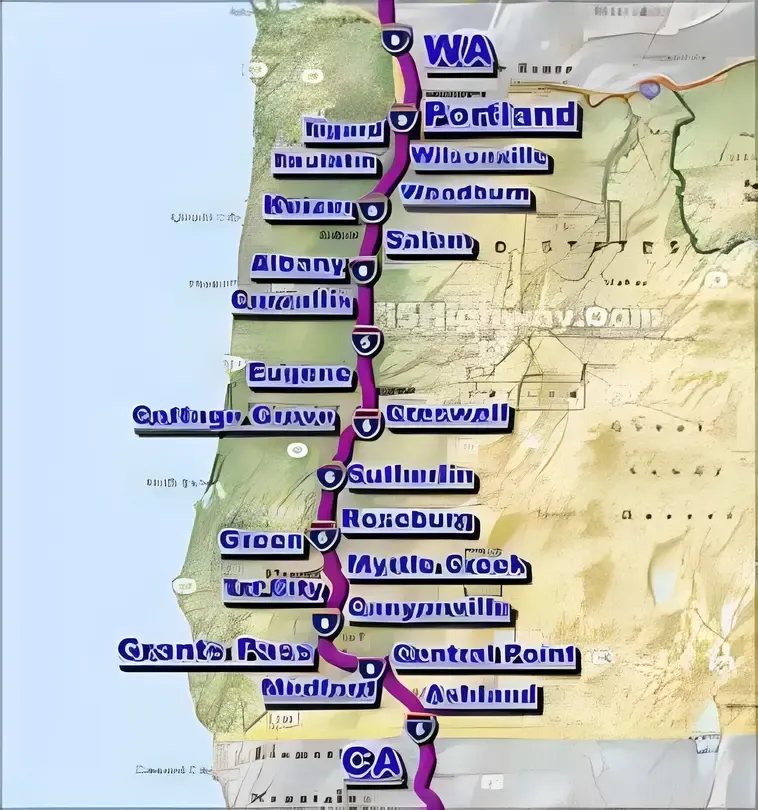
Supply Chain Logistics and The Importance of I-5 and I-84 Trucking Corridors
Trucking is the backbone of Oregon’s freight transportation system, and two major interstate highways
Oct. 7, 2025, 5:54 p.m.
Read more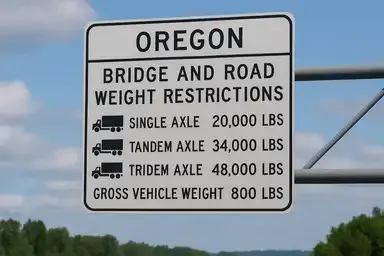
Bridge and Road Weight Restrictions in Oregon
Oregon enforces specific weight restrictions on bridges and roadways to ensure safety and preserve infrastructure. Here's an overview of key regulations and notable bridge restrictions:
Oct. 6, 2025, 7:38 p.m.
Read more
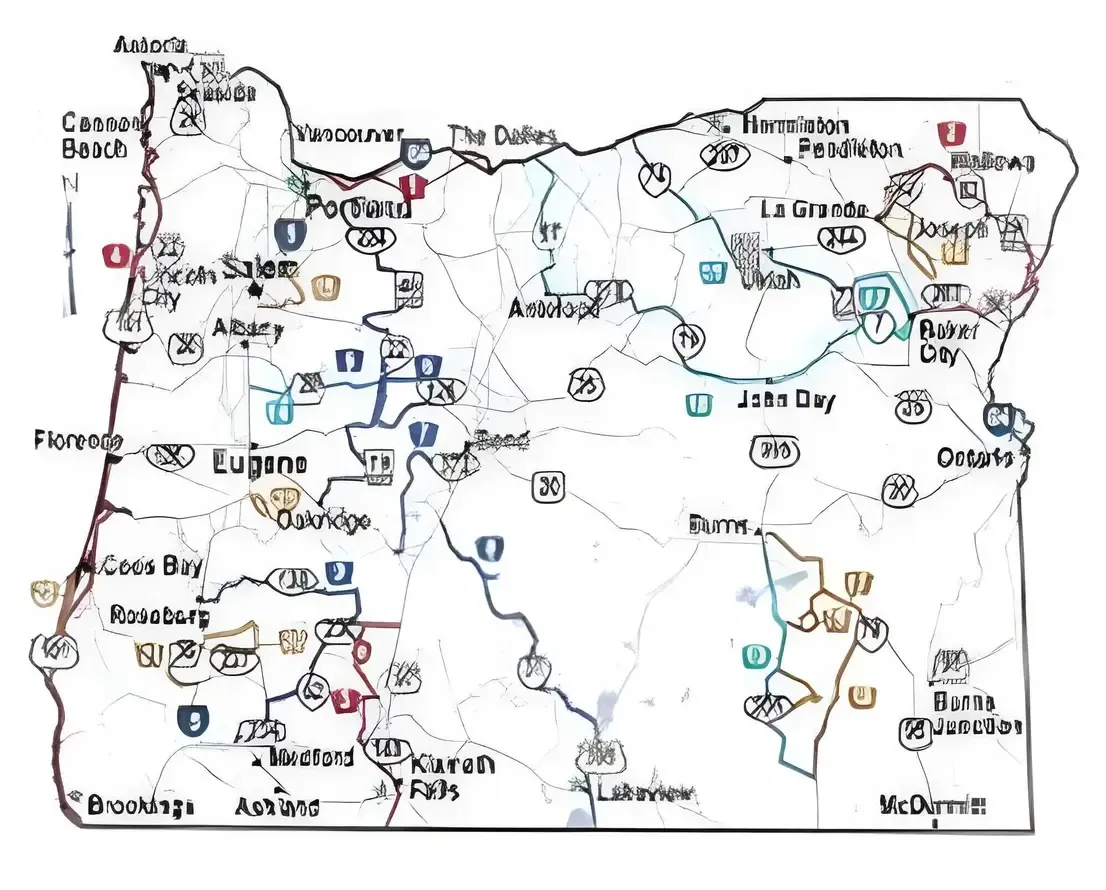
Major Trucking Routes in Oregon (I-5, I-84, US-101)
Major trucking routes in Oregon (I-5, I-84, US-101)
Oct. 5, 2025, 9:21 a.m.
Read more