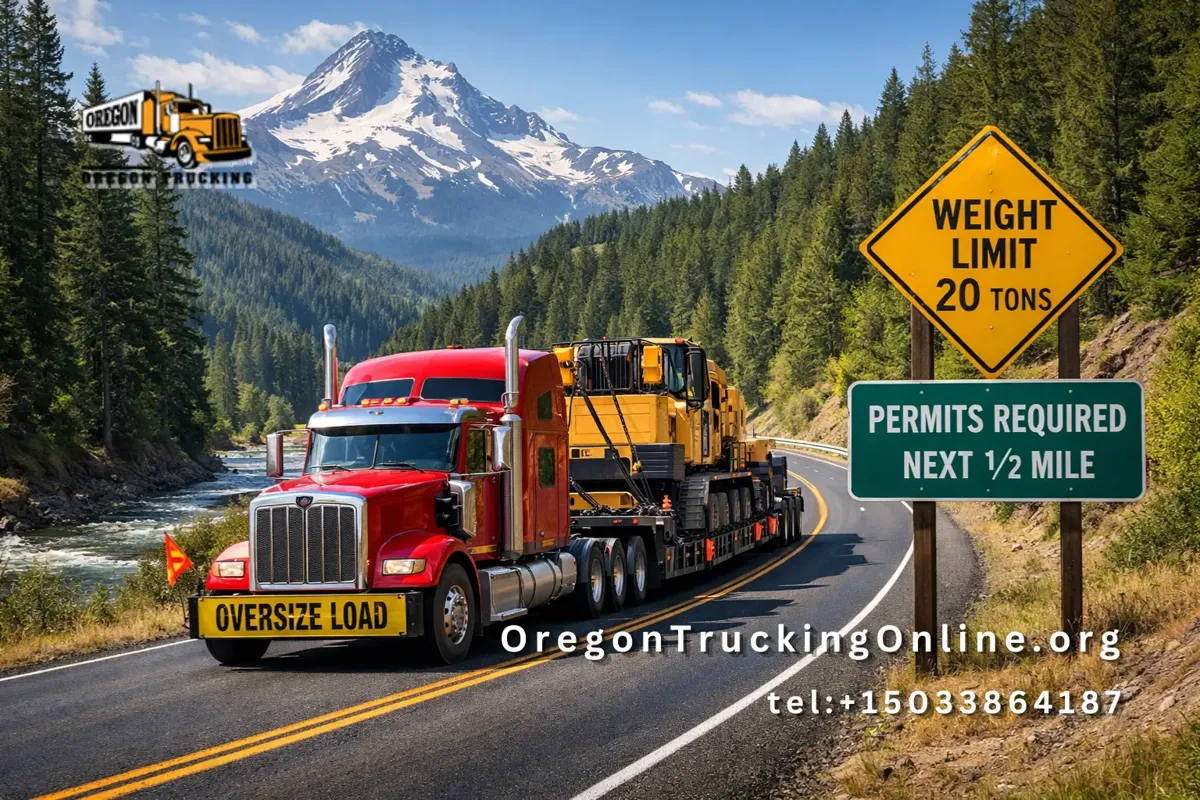
Choosing the right Oregon permit can make or break your operation. It isn’t just about compliance: permit selection affects your costs, efficiency, and delivery timelines. Truckers running through Oregon should assess both load type and route to sidestep unnecessary fees or delays.
Understanding Load Type Requirements
Identify your load type to determine the correct permit.
Exceed 26,000 pounds? Use Oregon's weight-mile tax system. For occasional trips, use a temporary weight-mile tax permit instead of full registration.
Haul oversized or overweight loads? Get a special Oversize/Overwight permit for height, width, and length. Comply with Oregon road safety rules.
Entering Oregon without registration? Use a trip permit for short-term legal operation.
Matching Your Permit To Your Route
Your route can just as much impact the type of permit required as your load.
Travel through restricted highways, bridges, or urban areas? Get extra approvals. Some routes need strict weight or routing permits for oversized loads.
Planning ahead helps you select the correct permit. Reviewing your route before applying helps you avoid fines, delays, or rerouting mid-trip.
Common Mistakes Truckers Should Avoid
Many truckers choose permits based solely on availability rather than actual need. This can lead to:
- Paying more than necessary for short trips
- Using incorrect permits for oversized loads
- Overlooking route-specific restrictions
Avoid these mistakes. Know your cargo and route details.
Why Many Truckers Choose Our Service
Many truckers and trucking companies choose Oregon Trucking Online because the process is faster, simpler, and more reliable than navigating state systems on their own. Instead of dealing with confusing requirements or risking costly errors, our platform helps you select the exact permit you need based on your load and route.
Let us streamline the process and reduce your downtime. Stay compliant and focus on driving.
Manage one or many loads and save time with our service.
Selecting the right Oregon permit isn't complicated when you take the time to match your load and route to the appropriate option. With proper planning and the right support, you can avoid delays, reduce costs, and keep your operations running smoothly.
For more information, visit the Oregon Department of Transportation: