Oregon Towing Permit
Key Permit/Licensing Requirements in Oregon
-
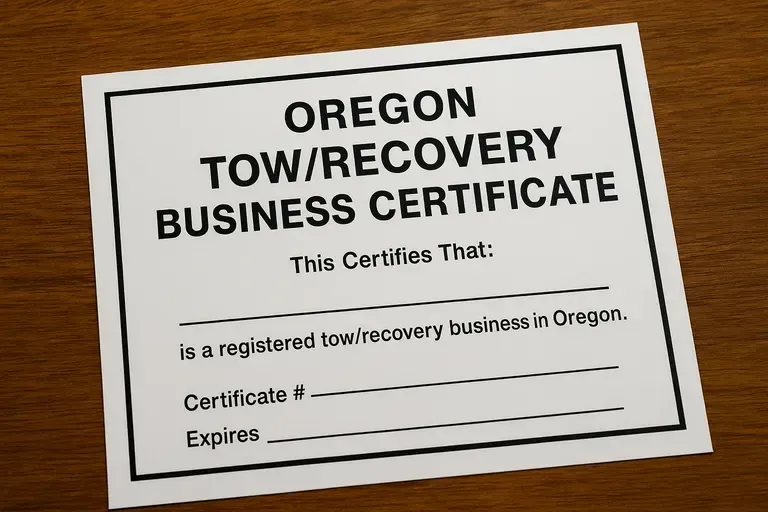
For a business that tows or recovers vehicles (that you don’t own) in Oregon, you must have a Tow/Recovery Business Certificate.
-
Each tow/recovery vehicle must meet: valid registration, insurance (minimum $50,000 cargo + $750,000 liability per accident) and, depending on weight, registration via www.oregontruckingonline.org
-
If your tow vehicle is going to haul or tow disabled or oversize loads, you may need a special permit under the Oversize/Over-weight rules (e.g., for “continuous trip permit” or “single-trip permit”) from the Over-Dimension Permit Unit.
-
Local licensing: If you tow vehicles parked within a city or county boundary without owner consent, you may need a license issued by that city/county.
Step-by-Step for Getting Started
-
Decide if your business is “for compensation” and towing vehicles you don’t own — if yes, business certificate is needed. (See eligibility in DMV “Tow/Recovery Vehicles” page)
-
Register each tow vehicle properly depending on its weight and operation:
-
Under 26,000 lbs combined weight: DMV registration.
-
Over 26,000 lbs or prorate registration: use CCD registration + tow business certificate.
-
-
Ensure insurance coverage: at least $750,000 liability per accident, and $50,000 cargo.
-
If you will tow disabled/oversize loads: apply for the appropriate permit (single-trip or continuous trip) as required under the oversize load rules (chapter 734, division 76).
-
Comply with equipment and safety standards for your tow trucks (chains, gear, etc).
Things to Watch / Additional Info
-
Make sure your tow business is aware of local city or county licenses if you operate inside those jurisdictions.
-
Oversize/over‐weight towing (i.e., towing heavy disabled vehicles or combinations) involves stricter rules (weight limits, routes, classes of tow vehicles).
-
The classification of tow vehicle matters (Class A, B, C, D) under the rules of Chapter 734.