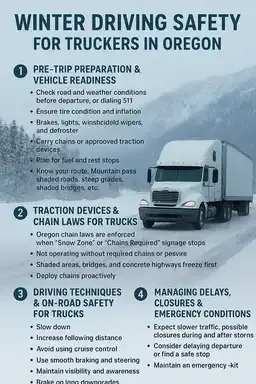
1. Pre-Trip Preparation & Vehicle Readiness
-
Always check road and weather conditions before departure. ODOT recommends using TripCheck or dialing 511 for updates.
Ensure your truck is properly equipped:
-
Tire condition and inflation: tread depth, no obvious damage.
-
Brakes, lights, windshield wipers, defroster all functioning.
-
Carry chains or have approved traction devices. Oregon’s chain law applies when signposted.
-
Plan fuel, rest stops, emergency kit. ODOT advises a full tank and supplies in case of delays.
-
Know your route: Mountain passes and shaded roads freeze faster; be aware of steep grades, shaded bridges, and potential closures.
2. Traction Devices & Chain Laws for Trucks
-
The Oregon chain law is in effect when “Snow Zone” or “Chains Required” signage is posted. Chains—or other approved traction devices—must be used by commercial vehicles when required.
-
Failure to comply can result in fines and may lead to being removed from service (especially for commercial vehicles).
-
Note: Shaded areas, bridges, and concrete highway surfaces freeze first — deploying chains proactively before problems escalate is wise.
3. Driving Techniques & On-Road Safety for Trucks
-
Slow down: On slick or icy roads, reduce speed significantly below posted limits to match conditions.
-
Increase following distance: For heavy trucks, stopping distance increases even more on slick surfaces. Bridges freeze early: approach cautiously.
-
Avoid cruise control: Especially dangerous on slippery roads because it reduces your ability to respond.
-
Braking and steering: If wheels lock or vehicle starts to “float” (lose traction) ease off throttle and brakes; steer smoothly. Sudden movements increase risk of jackknife.
-
Visibility and awareness: Heavy snow, blowing snow, fog reduce visibility. Use low beams. Be extra cautious of snowplows or sanders — do not pass on the right.
-
Brake on long downgrades: Maintain control, use engine braking if available, keep speed manageable to avoid runaway situations.
Be especially cautious when approaching:
-
Mountain passes
-
Shaded curves and off-ramps
-
Bridges/overpasses (they freeze first)
4. Managing Delays, Closures & Emergency Conditions
-
Expect slower traffic, possible closures during/after storms. One crash or jack-knife of a truck can block a highway for hours.
-
If conditions deteriorate, consider delaying departure or finding a safe stop. Fatigued driving in bad weather is highly risky.
-
Maintain an emergency kit: blankets, water, food, shovel, extra fuel/DEF (for your truck), traction aids.
5. Specific Considerations for Commercial Trucks
-
Because of their size and weight, trucks require more distance, and the consequences of error are greater. ODOT notes that when a large truck fails to comply (e.g., chains), it can impact dozens or hundreds of other travelers.
-
Routes used by freight often traverse high-elevation passes (like those on Interstate 84, Interstate 5, etc) where chain requirements and sudden weather changes are common.
-
In severe conditions, even if the route is “open,” the required traction equipment or reduced speed may apply — verify the signage and posted requirements.
-
Ensure your company dispatches allow flexibility for weather-related delays. Prevention of accidents is by far better than reaction.
✅ Quick Winter Safety Checklist for Truckers
-
Check TripCheck/511 for current route conditions.
-
Ensure truck equipment: tires, brakes, lights, chains.
-
Know if you’re entering a “Snow Zone” or chain-required area.
-
Adjust speed, avoid cruise.
-
Allow long stopping distances, avoid sudden moves.
-
Stay well back from snowplows/sanders; do not pass on the right.
-
Be prepared to stop or hold in safe location when weather turns.
-
Carry emergency kit and ensure communication devices are charged.