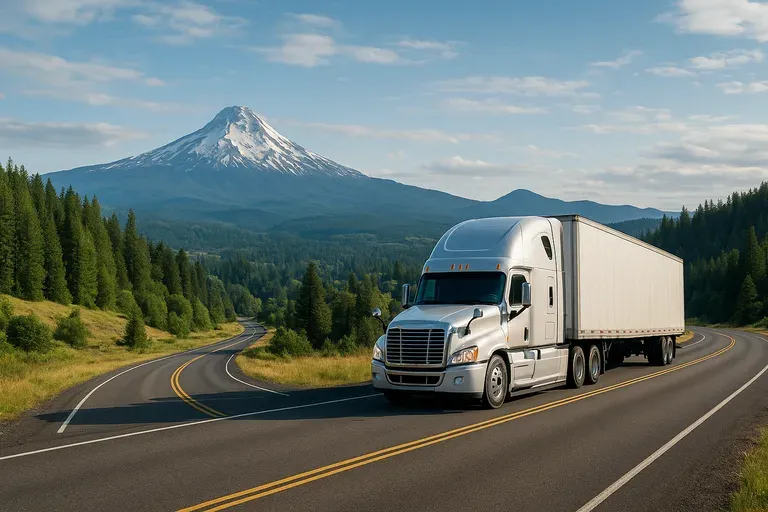
1. Who Must Pay the WMT
-
The tax applies to commercial trucks with a gross vehicle weight (GVW) of 26,000 pounds or more, including:
-
Tractors and trailers
-
Straight trucks used for hauling freight or commercial purposes
-
-
Vehicles registered under the International Registration Plan (IRP) or already paying Oregon fuel taxes may have special rules or exemptions.
2. How the Tax is Calculated
-
The WMT is calculated using a formula based on vehicle weight and miles traveled on Oregon public roads:
Tax = (Miles traveled in Oregon) × (Weight factor rate)
-
Weight factor: Heavier trucks pay more per mile than lighter trucks.
-
Trucks must report mileage for the current tax year, and rates are periodically adjusted by the Oregon Department of Transportation (ODOT).
3. Registration and Reporting
-
Truck owners must register annually with ODOT for a WMT account.
-
Trucks report Oregon miles traveled, either by:
-
Mileage reporting forms (for smaller fleets)
-
Electronic logging systems (for larger fleets)
-
-
Payment is usually annually or quarterly depending on mileage.
4. Exemptions & Credits
-
Trucks registered in Oregon and paying the Oregon fuel tax may get credits against the WMT to avoid double taxation.
-
Some out-of-state trucks may qualify for reduced rates or exemptions if they already pay equivalent taxes elsewhere.
5. Why the WMT Exists
-
The primary goal is to fund road maintenance fairly:
-
Heavy trucks cause more damage than lighter vehicles.
-
Fuel taxes alone don’t accurately reflect road usage by heavy trucks.
-
-
Encourages efficient road use and ensures infrastructure sustainability.
Key Takeaway: The Oregon WMT is essentially a “pay-per-mile” tax based on the weight of commercial trucks. Heavier trucks pay more, and all commercial trucks must report their mileage in Oregon to comply.