Get the bond the same day by calling (503) 386-4187
Why Oregon Requires the HUT Bond
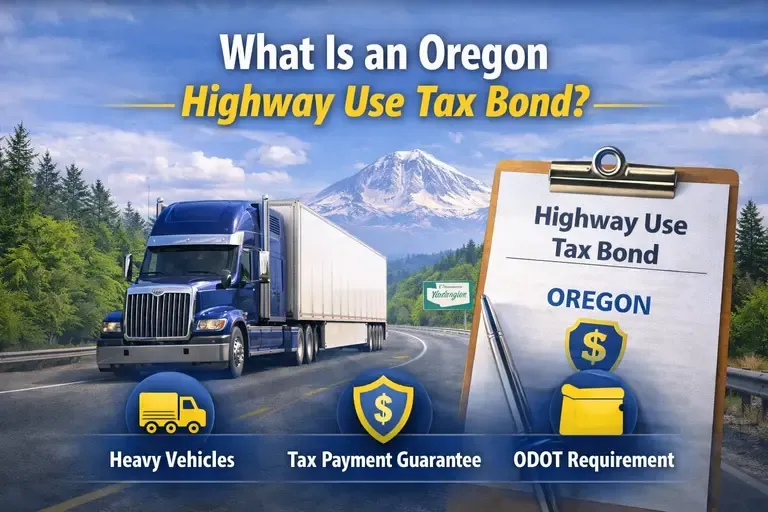
Oregon imposes a Highway Use Tax on heavy vehicles (generally 26,001 pounds or more) that travel on public highways. Because this tax is based on miles traveled rather than fuel purchased, the state requires a bond to ensure carriers accurately report mileage and pay taxes on time.
The HUT bond acts as a financial guarantee that protects the state if a carrier:
-
Fails to file required mileage reports
-
Underreports miles traveled in Oregon
-
Does not pay Highway Use Taxes when due
Who Needs an Oregon HUT Bond
You may be required to obtain an Oregon Highway Use Tax Bond if you:
-
Operate a heavy truck or truck-tractor subject to Oregon’s weight-mile tax
-
Are a new carrier registering for Oregon HUT
-
Have a history of late payments or compliance issues
-
Are specifically instructed by ODOT to post a bond
Both in-state and out-of-state carriers can be required to file an HUT bond.
How the Bond Works
The HUT bond involves three parties:
-
Principal: The trucking company or carrier
-
Obligee: Oregon Department of Transportation
-
Surety: The bonding company that issues the bond
If the carrier fails to pay the required taxes, ODOT can file a claim against the bond. The surety may pay the state, but the carrier is ultimately responsible for reimbursing the surety.
Bond Amount and Cost
-
The bond amount is set by ODOT and is often based on estimated tax liability
-
The cost (premium) paid by the carrier is typically a small percentage of the bond amount and depends on credit and financial strength
Key Takeaway
An Oregon Highway Use Tax Bond is not insurance—it is a compliance tool that ensures the state receives Highway Use Tax payments from heavy vehicle operators. Maintaining the bond is essential for legal operation and uninterrupted registration in Oregon.