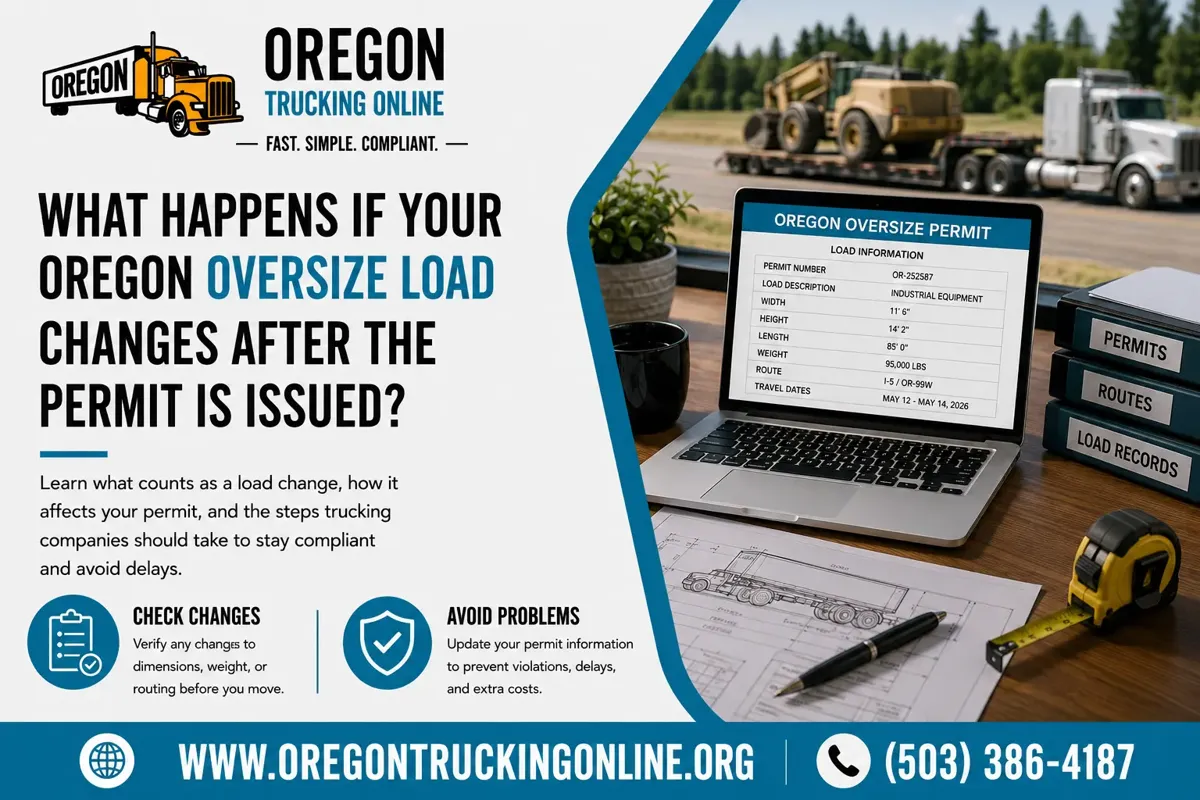
What Happens If Your Oregon Oversize Load Changes After The Permit Is Issued?
Table Of Contents
-
Introduction
-
Why Load Changes Matter After Permit Issuance
-
What Counts As A Load Change?
-
Can You Continue With The Original Permit?
-
What Should You Do If The Load Becomes Larger Or Heavier?
-
What If The Load Becomes Smaller?
-
What If The Loading Configuration Changes?
-
How To Prevent Permit Problems
-
Why Many Trucking Companies Choose Our Service
-
FAQ
Introduction
Obtaining an Oregon Oversize Permit is only one part of preparing for an oversized movement. The actual truck and load must continue to match the information and conditions associated with the permit.
Sometimes a load changes after the permit has been issued. Cargo may be replaced, equipment may be added, dimensions may change, or the final loading arrangement may differ from what was originally submitted.
When this happens, trucking companies should not assume that the original permit automatically covers the new configuration. Oregon's permitting information is based on specific vehicle and load details, and changes can affect the conditions of the movement.
Reviewing the change before the truck moves can help prevent delays, route problems, and compliance concerns.
Why Load Changes Matter After Permit Issuance
An Oregon Oversize Permit is issued for a particular permitted movement. Information such as vehicle details, load dimensions, weight, route, travel dates, and other conditions can be important to that authorization.
If the actual load no longer matches the information used for the permit, the carrier should review the situation before continuing.
A change that appears minor during loading can affect whether the vehicle remains within the permitted dimensions or weight. It can also affect routing, escort requirements, travel restrictions, or other permit conditions.
For that reason, dispatchers and drivers should compare the final load with the issued permit before departure.
What Counts As A Load Change?
A load change can involve more than adding or removing cargo. It may include changes to overall width, height, length, weight, overhang, or loading position.
Examples include replacing equipment, adding attachments to machinery, changing how cargo is positioned on the trailer, or using a configuration that alters the measured dimensions.
Even if the origin and destination remain the same, the change can still matter because the permit information may no longer accurately describe the actual movement.
Before departure, the carrier should measure the final configuration and compare it with the permit.
Can You Continue With The Original Permit?
Trucking companies should not automatically assume that the original permit remains valid after a significant load change.
The first step is to identify exactly what changed and compare the updated information with the permit. If the new configuration exceeds the permitted dimensions or weight or conflicts with the permit conditions, the carrier should resolve the issue before continuing.
Do not rely on a previous approval simply because the permit was already issued. The goal is to make sure the authorization corresponds with the actual vehicle and load.
What Should You Do If The Load Becomes Larger Or Heavier?
A load that becomes wider, taller, longer, or heavier deserves immediate attention.
For example, a construction machine may receive an attachment that increases its height or width after the permit is issued. Additional cargo could also increase total weight.
These changes can affect permit requirements and potentially the approved route. A route that works for one configuration may not be appropriate for a larger or heavier load.
The carrier should review the updated measurements and determine whether the existing permit needs to be changed or replaced before the truck moves.
What If The Load Becomes Smaller?
A smaller load should still be reviewed rather than automatically treated as irrelevant.
Removing cargo may change overall dimensions or weight, but the carrier should still compare the final configuration with the issued permit. The goal is to make sure the documents accurately represent the movement.
If the change affects the permit conditions, the company should determine whether updated documentation is necessary before the trip begins.
What If The Loading Configuration Changes?
The way cargo is positioned can affect the overall dimensions of an oversized load.
Equipment may be loaded in a different orientation, shifted on the trailer, or secured in a way that changes overhang or overall width. A different loading arrangement can therefore create a different permitted configuration.
Drivers and loading crews should check the final arrangement rather than relying only on measurements recorded before loading.
If the final configuration does not match the permit, the carrier should resolve the discrepancy before beginning the permitted movement.
How To Prevent Permit Problems
The easiest way to prevent problems is to create a final permit review before the truck leaves.
Dispatch should compare the issued permit with the actual vehicle and load, including
-
Vehicle information
-
Load description
-
Width
-
Height
-
Length
-
Weight
-
Axle information
-
Origin and destination
-
Approved route
-
Travel dates
-
Travel times
-
Escort requirements
-
Special conditions
If any important information has changed, the company should address it before the truck begins the permitted movement.
It is also helpful to communicate changes between the shipper, loading crew, driver, and dispatch team. A driver should not be expected to determine independently whether a major change is covered by an existing permit.
Why Many Trucking Companies Choose Our Service
Many trucking companies choose Oregon Trucking Online because oversize permit requirements can become complicated when load details change after an application has been completed. Our service helps simplify the process with fast processing, experienced permit specialists, secure online applications, 24/7 customer support, weekend and holiday availability, and competitive pricing.
Our team can help trucking companies review permit information and address changes that may affect an Oregon Oversize Permit. This can be especially useful when a load changes shortly before a scheduled departure.
The goal is to make the permitting process easier so trucking companies can spend less time dealing with paperwork and more time keeping their operations moving.
Apply with Oregon Trucking Online today.
FAQ
What Happens If My Oregon Oversize Load Changes After The Permit Is Issued?
Review the change before continuing. Compare the final vehicle and load information with the issued permit and determine whether updated permit action is necessary.
Can I Continue If The Load Is Heavier Than The Permit?
Do not assume the original permit covers the additional weight. Review the updated weight and determine whether the permit needs to be changed before movement.
What If The Load Becomes Wider Or Taller?
A change in width or height can affect permit conditions and routing. Measure the final configuration and address the difference before travel.
Does Changing The Loading Position Matter?
It can. A different loading arrangement may change overall dimensions or overhang, so the final configuration should be checked against the permit.
What Should Dispatch Check Before Departure?
Dispatch should verify the vehicle, load description, dimensions, weight, route, travel dates, travel times, escort requirements, and special conditions.
How Can Trucking Companies Avoid Load-Related Permit Problems?
Perform a final measurement and permit review after loading but before departure. Any significant discrepancy should be addressed before the permitted movement begins.
For more information, visit the Oregon Department of Transportation. Oregon Department of Transportation