What Happens If An Oregon Weight-Mile Tax Report Is Filed For The Wrong Reporting Period?
Table of Contents
-
Understanding Oregon Weight-Mile Tax Reporting Periods
-
What Happens When A Report Is Filed For The Wrong Period?
-
Why The Correct Reporting Period Matters
-
How To Identify A Wrong-Period Filing
-
What Should A Carrier Do After Discovering The Error?
-
What If Payment Was Also Applied To The Wrong Period?
-
How To Prevent Future Filing Errors
-
Why Many Trucking Companies Choose Our Service
-
FAQ
Understanding Oregon Weight-Mile Tax Reporting Periods
Oregon Weight-Mile Tax reports are filed according to the reporting schedule assigned to the carrier. Qualified carriers may report monthly or quarterly, depending on their approved filing status.
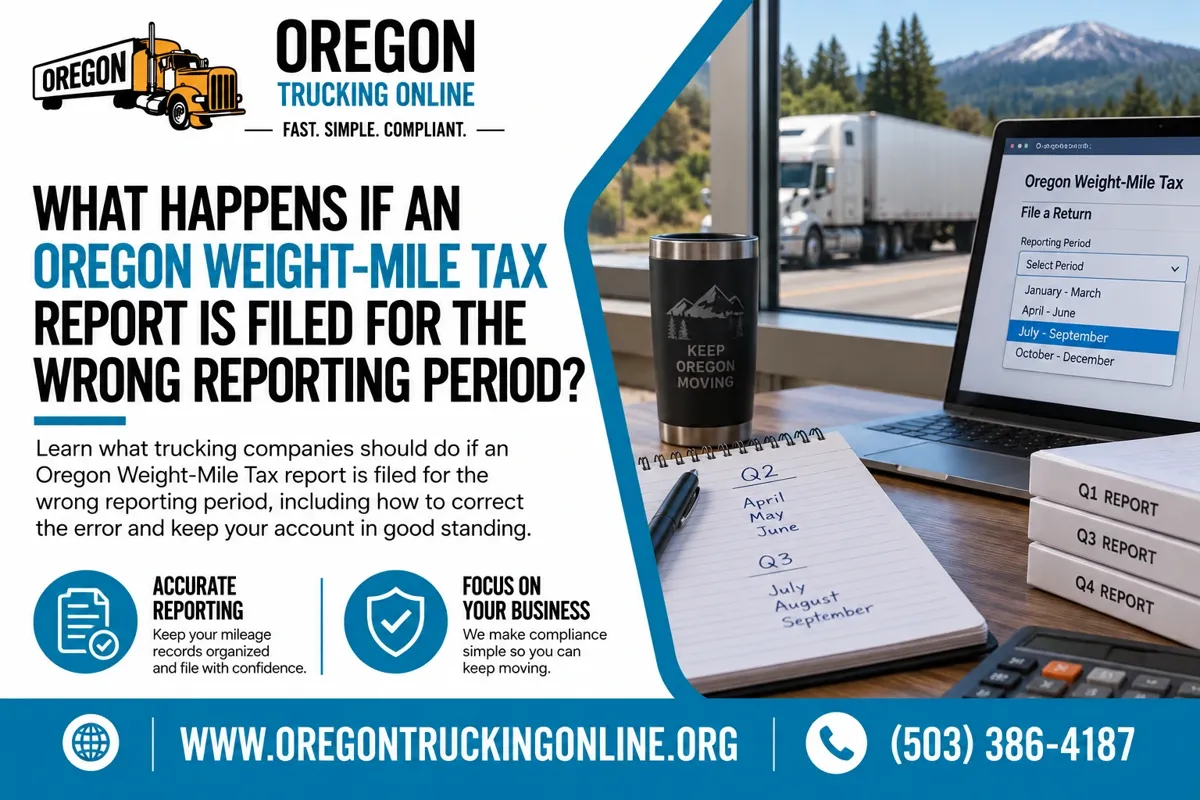
For quarterly filers, the reporting periods are January through March, April through June, July through September, and October through December. Quarterly reports are due after the quarter ends.
That makes the reporting period an important part of every Oregon Weight-Mile Tax filing. Mileage and payments need to be associated with the period in which the activity occurred.
A wrong-period filing can happen when an employee selects the wrong quarter, uses records from the previous period, or files before confirming which period the mileage belongs to.
What Happens When A Report Is Filed For The Wrong Period?
Filing a report for the wrong period can place mileage and tax information against the incorrect reporting period. Even when the mileage is eventually reported, the account may not accurately show when the Oregon operations occurred.
For example, a carrier intending to report second-quarter operations could accidentally submit the information under the first quarter. The first-quarter record would then contain mileage that belongs to April through June, while the second quarter could remain incomplete.
The carrier should address the mistake instead of leaving both periods inconsistent. The goal is to make sure each reporting period reflects the operations that actually occurred during it.
Why The Correct Reporting Period Matters
Each Oregon Weight-Mile Tax report covers a defined period. For quarterly filers, ODOT identifies specific three-month periods and filing deadlines.
Using the wrong period can affect the mileage total, tax recorded, account balance, and whether a report appears complete.
Oregon also requires weight-mile tax reports even when there is no tax due for the reporting period. A wrong-period filing, therefore, should not simply be treated as a substitute for the report required for the correct period.
The carrier should correct the incorrect filing and make sure the correct reporting period is properly reported.
How To Identify A Wrong-Period Filing
Compare the reporting period shown on the submitted report with the dates of the mileage records used to prepare it.
Review the period selected in Oregon Trucking Online, vehicle mileage records, dispatch records, and accounting documentation. For quarterly filers, confirm whether the mileage belongs to January through March, April through June, July through September, or October through December.
Also review the filing confirmation and payment information. A successful payment does not necessarily mean the information was associated with the correct period.
Once the discrepancy is confirmed, document which report was filed incorrectly and which period should contain the mileage.
What Should A Carrier Do After Discovering The Error?
Do not simply file another report without reviewing the first filing. Submitting another report without correcting the original can create conflicting information.
ODOT provides a process for amending mileage tax reports when a previous report contains an error. The carrier should use the correction process to bring the affected account records to the correct amounts.
Review the original filing, identify the mileage and tax that were reported incorrectly, and prepare the appropriate amended information. Keep records supporting the actual Oregon operations for both periods.
If additional tax is due, address it promptly because late charges can apply to tax that was not paid on time. If the correction creates a credit, keep documentation supporting the adjustment.
What If Payment Was Also Applied To The Wrong Period?
A wrong-period report may also have a payment associated with it.
Identify how the payment appears on the account and compare the payment confirmation with the corrected report. Do not assume the payment automatically transfers to the correct period.
If the payment needs separate correction, contact Oregon's Commerce and Compliance Division for instructions.
Keep payment confirmations and related correspondence with the affected reporting-period records.
How To Prevent Future Filing Errors
Before preparing a report, write down the exact reporting period and compare it with the mileage records being used.
For quarterly filers, verify the quarter before entering totals. After the report is prepared, have another employee review the reporting period, mileage, vehicle information, and payment amount.
Carriers should also avoid combining records from different periods. Close out one period before using mileage from another, and keep copies of submitted reports and payment confirmations.
A consistent filing checklist can make quarter-end reporting easier to review.
Why Many Trucking Companies Choose Our Service
Oregon Trucking Online helps trucking companies manage their Oregon Weight-Mile Tax needs through a convenient online service. Filing for the wrong period can create extra administrative work because carriers may need to review mileage records, payments, account information, and corrected filings.
Our service gives trucking companies a straightforward way to organize their permit and tax-related needs. This can be helpful when accounting and dispatch teams are working with multiple vehicles and quarterly mileage records.
Keeping the process organized can help carriers identify the correct reporting period before submitting information and address discrepancies more efficiently when an error occurs.
FAQ
What Happens If I File An Oregon Weight-Mile Tax Report For The Wrong Quarter?
The mileage and tax may be associated with the wrong reporting period. Review the affected reports and use the applicable correction process.
Do I Need To File The Correct Quarter Separately?
A wrong-period filing does not automatically replace the report required for the correct period. Review both periods and make sure each required report is properly filed.
Can I Just File Another Report For The Correct Period?
Do not do so without reviewing the original filing. Correcting the first report may be necessary to avoid conflicting information.
Can An Oregon Weight-Mile Tax Report Be Amended?
Yes. ODOT provides a process for amending mileage tax reports when an error is discovered on a previous report.
What If The Wrong-Period Filing Also Included A Payment?
Review how the payment appears on the account and contact ODOT if the payment needs to be corrected.
What Records Should I Keep When Correcting A Report?
Keep the original report, amended information, mileage records, payment confirmations, and documentation explaining the correction.
Are Zero-Tax Reports Still Required?
Yes. Oregon requires weight-mile tax reports even when there is no tax due for the reporting period.
For more information, visit the Oregon Department of Transportation.