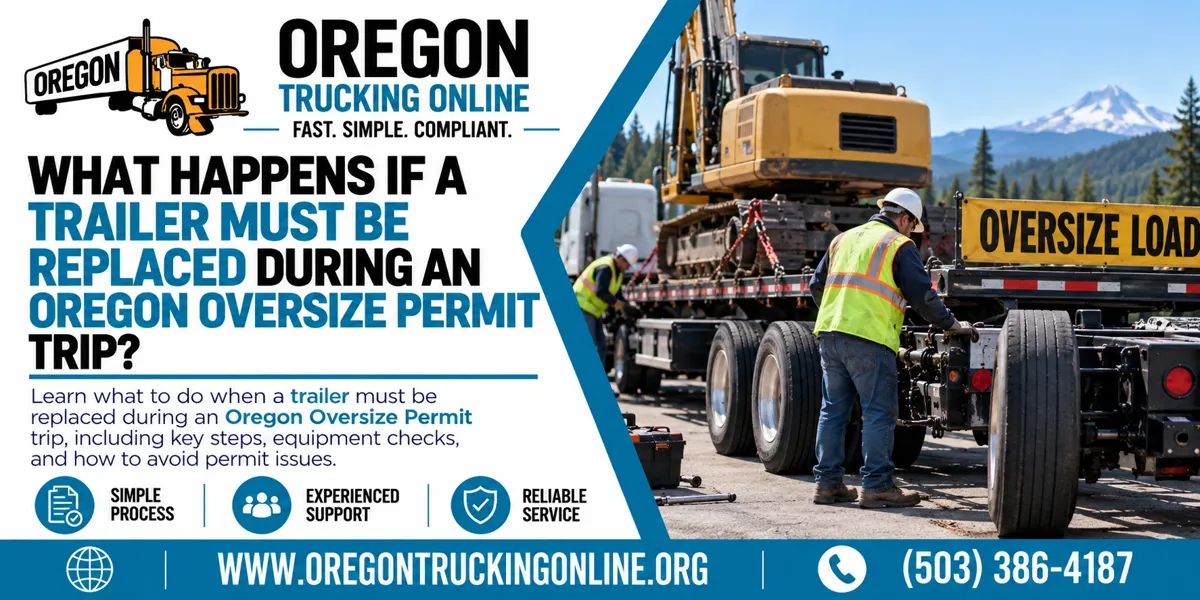
What Happens If A Trailer Must Be Replaced During An Oregon Oversize Permit Trip?
Table Of Contents
-
Introduction
-
Why A Trailer Replacement Matters
-
Can The Existing Permit Be Used With The Replacement Trailer?
-
What Should The Carrier Do First?
-
What If The Trailer Fails During The Trip?
-
What Information Should Be Checked?
-
What If The Replacement Trailer Changes The Load Configuration?
-
How To Prevent Trailer Replacement Problems
-
Common Mistakes To Avoid
-
Why Many Trucking Companies Choose Our Service
-
FAQ
Introduction
A carrier may begin an oversize movement and discover that the trailer cannot safely continue. A mechanical failure, tire problem, structural issue, or other unexpected event may require the trailer to be replaced before the load reaches its destination.
When this happens during a permitted trip, the carrier should not assume that the original Oregon Oversize Permit automatically covers the replacement trailer.
The permit was issued using specific information about the vehicle and permitted movement. If the equipment changes, the carrier should review the permit and determine what needs to be addressed before the replacement trailer continues the trip.
Why A Trailer Replacement Matters
A trailer replacement can affect information connected with the permitted movement. The replacement equipment may have a different identification number, axle configuration, dimensions, or other characteristics.
Even when the cargo itself has not changed, the new trailer may alter the overall vehicle combination.
For an oversize load, these differences can be important because the permit is based on the actual configuration of the vehicle and load.
The carrier should therefore treat a trailer replacement as a significant equipment change rather than simply a roadside repair.
Can The Existing Permit Be Used With The Replacement Trailer?
Carriers should not assume that an existing Oregon Oversize Permit can simply be transferred to another trailer.
First, compare the replacement trailer with the equipment information associated with the permit. Determine whether the vehicle configuration, axle arrangement, dimensions, weight, and other relevant details remain consistent.
If the replacement trailer changes information that was part of the permitted movement, the carrier should address the change before continuing.
The original permit should not be manually altered to make it appear that the replacement trailer was included.
What Should The Carrier Do First?
Safety should be the priority. The truck should be moved to a safe location, and the damaged trailer should be handled appropriately.
Once the immediate issue is under control, dispatch should gather information about the replacement trailer and compare it with the permit.
Important questions include whether the replacement equipment has the same general configuration, whether the load can be transferred safely, and whether the resulting vehicle combination still corresponds with the permitted movement.
The carrier should keep the original Oregon Oversize Permit and supporting records while determining the next step.
What If The Trailer Fails During The Trip?
A trailer may fail after the vehicle has already started the permitted movement. For example, a serious mechanical issue could make the original trailer unsafe to continue.
In that situation, the driver should notify dispatch and avoid continuing until the equipment issue has been addressed.
If a replacement trailer is arranged, dispatch should review the replacement equipment before the load is transferred and the trip resumes.
The carrier should also document the breakdown, the equipment change, and the information associated with the replacement trailer. Keeping an organized record can help explain why the original equipment was changed during the trip.
What Information Should Be Checked?
Before the replacement trailer is used, the carrier should compare the new equipment with the permit and trip records.
Important information can include:
-
Trailer identification
-
Axle configuration
-
Vehicle dimensions
-
Weight information
-
Load information
-
License plate information
-
Route
-
Destination
-
Permit conditions
The carrier should also verify that the load remains properly positioned and secured after it is transferred to the replacement trailer.
If the replacement changes the dimensions, weight, or configuration of the overall vehicle, those changes should be addressed before the trip continues.
What If The Replacement Trailer Changes The Load Configuration?
This is one of the most important issues to review.
A different trailer may change the height, width, length, axle distribution, or overall weight of the combination. The load may also sit differently on the replacement equipment.
If the replacement trailer causes the permitted configuration to change, the carrier should not assume that the original Oregon Oversize Permit still covers the new setup.
The carrier should review the updated configuration and determine the appropriate permitting action before proceeding.
How To Prevent Trailer Replacement Problems
Carriers cannot always prevent an unexpected trailer failure, but they can make the response easier.
Maintain accurate records for every permitted movement, including vehicle and trailer information. Keep electronic copies of the permit so dispatch can quickly review the original authorization.
Drivers should also know who to contact when equipment problems occur during an oversize movement.
For fleets, establishing a trailer-replacement procedure can help dispatch quickly collect the required information, verify the replacement equipment, and prevent the truck from continuing with mismatched permit documentation.
Common Mistakes To Avoid
Assuming The Permit Automatically Transfers: A replacement trailer can change the permitted vehicle configuration.
Changing the Permit By Hand: Do not manually rewrite or alter an issued permit.
Ignoring Axle Changes: Different axle arrangements can affect the vehicle information associated with the movement.
Forgetting About Load Dimensions: A replacement trailer can change how the load sits and may affect dimensions.
Continuing Before Reviewing the New Equipment: Address the equipment change before the trip resumes.
Failing to Document the Breakdown: Keep records of why the original trailer was replaced and what equipment was used instead.
Why Many Trucking Companies Choose Our Service
Many trucking companies choose Oregon Trucking Online because unexpected equipment problems can create complicated permit questions when an oversize load is already on the road.
Our service provides online permit processing and experienced permit support to help carriers manage Oregon trucking requirements more conveniently.
When a trailer must be replaced during an Oregon Oversize Permit trip, having permit specialists available can help carriers review the replacement equipment, compare the updated configuration with the permit, and determine the appropriate next step before the load continues.
FAQ
Can I Use My Existing Oregon Oversize Permit With A Replacement Trailer?
Do not assume that the permit automatically transfers. Review the replacement trailer and determine whether the permitted vehicle configuration has changed.
What If The Trailer Is Replaced Because Of A Breakdown?
Address the safety issue first, notify dispatch, and review the replacement equipment before the trip continues.
Does A Different Axle Configuration Matter?
Yes. A different axle arrangement can change the vehicle configuration associated with the permitted movement and should be reviewed before continuing.
What If The Load Dimensions Change After The Trailer Is Replaced?
The changed dimensions should be reviewed before the trip resumes. Do not assume that the original permit automatically covers a different load configuration.
Can I Change The Trailer Information On The Permit Myself?
No. Do not manually alter the issued document. Use the appropriate process for addressing changes to the permitted movement.
What Records Should The Carrier Keep?
Keep the original permit, breakdown information, replacement trailer details, updated documentation, and records showing how the equipment change was handled.
How Can Carriers Reduce Delays When A Trailer Must Be Replaced?
Keep permit records organized, notify dispatch quickly, collect the replacement trailer information, and review the new configuration before continuing.
For more information, visit the Oregon Department of Transportation.