1. Purpose of Temporary Permits
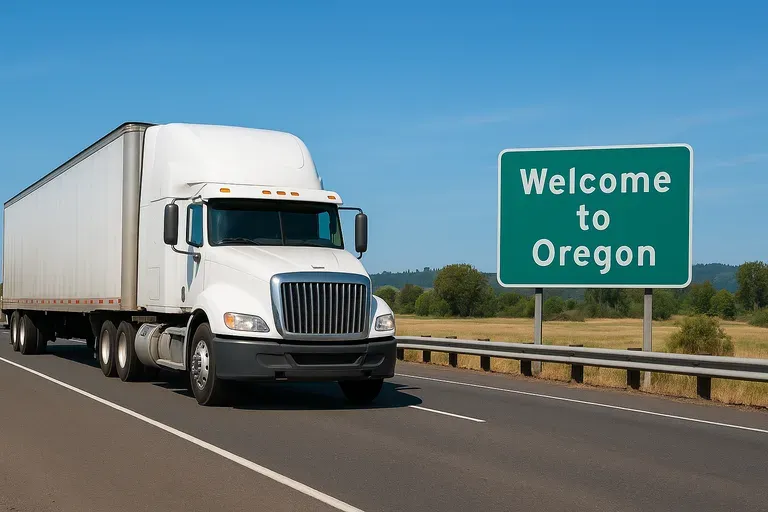
Temporary permits allow non-Oregon carriers to operate in the state for short-term purposes such as:
-
Delivering or picking up loads within Oregon.
-
Passing through the state en route to another destination.
-
Performing specific, time-limited transport operations.
They help carriers remain compliant without needing to fully register under IRP or set up permanent Oregon tax accounts.
2. Types of Temporary Permits for Out-of-State Carriers
a. Temporary Oregon Trip Permit
-
Required for vehicles that are not IRP-registered.
-
Valid for 10 consecutive days.
-
Covers registration requirements for a single trip within or through Oregon.
b. Temporary Oregon Fuel Permit
-
Needed when the carrier does not have an active IFTA (International Fuel Tax Agreement) license.
-
Allows fuel tax compliance for 10 consecutive days of operation.
c. Temporary Weight-Distance (Highway Use Tax) Permit
-
Applies to vehicles over 26,000 lbs. GVW that don’t have an Oregon Weight-Mile Tax account.
-
Permits the carrier to operate legally while paying highway use tax based on mileage and weight.
3. How to Obtain a Temporary Permit
Carriers can apply through:
-
Oregon Trucking Online - https://www.oregontruckingonline.org/
-
Phone (503) 386-4187
Applicants must provide:
-
Vehicle information (VIN, plate, GVW, etc.)
-
Route or trip details
-
Carrier’s USDOT number
-
Proof of insurance
4. Fees and Payment
Fees vary depending on permit type and vehicle configuration. Generally:
-
Trip permits cost around $100–$150.
-
Fuel permits range from $100–$250.
-
Weight-distance temporary accounts depend on mileage and vehicle weight.
Payments are accepted online or via authorized service providers.
5. Compliance and Penalties
Operating in Oregon without the required temporary permits can lead to:
-
Fines and citations at weigh stations.
-
Vehicle impoundment or delay until compliance is achieved.
-
Ineligibility for future temporary permits if violations repeat.
6. Best Practices for Out-of-State Carriers
-
Verify Oregon requirements before entering the state.
-
Keep digital or printed copies of all permits in the vehicle.
-
Ensure accurate mileage reporting for weight-distance compliance.
-
Use ODOT’s online resources to confirm permit validity and updates.