1. Determine if You Need an Oversize Load Permit
Before applying, verify whether your vehicle or load exceeds Oregon’s legal limits:
-
Width: 8 feet 6 inches
-
Height: 14 feet
-
Length: 40 feet (single vehicle) or 65 feet (combination)
-
Weight: 80,000 pounds gross vehicle weight
If your vehicle or load goes beyond these limits, you must obtain an oversize or overweight permit before entering or traveling within Oregon.
2. Choose the Type of Permit You Need
ODOT issues different permit types based on the nature of your trip:
-
Single-Trip Permit: For one specific route or haul.
-
Continuous Operation Permit: For carriers who frequently move similar loads.
-
Superload Permit: For exceptionally large or heavy loads (usually over 16 feet wide or 200,000 pounds).
Selecting the right type ensures compliance and efficient routing.
3. Gather the Required Information
Before you apply, prepare these details:
-
Company name and USDOT number
-
Vehicle license plate and VIN
-
Axle spacings and weights
-
Total load dimensions (height, width, length, weight)
-
Origin and destination points
-
Planned route through Oregon
Having complete data helps ODOT quickly evaluate your route and load safety.
4. Submit Your Application Online
You can apply through www.oregontruckingonline.org
Steps:
-
In the application select the box OVERSIZE
-
Enter all vehicle and route information.
-
Upload any required documents or maps.
-
Submit and pay the applicable permit fee online.
5. Wait for Review and Approval
After submission, ODOT reviews your application to ensure your proposed route can handle the load safely.
They may adjust your route to avoid low bridges, narrow roads, or weight-restricted areas.
Approval usually takes a few hours to one business day, depending on load complexity.
6. Print and Carry Your Permit
Once approved, print your permit and carry it in the vehicle at all times during the trip.
Make sure the driver and dispatchers understand any listed conditions such as:
-
Travel time restrictions (e.g., daylight-only travel)
-
Escort or pilot car requirements
-
Speed limits or route detours
7. Follow Escort and Safety Requirements
For certain large or heavy loads, Oregon requires pilot cars or escort vehicles.
Escort requirements depend on width, height, and route type. Always check your permit for specific rules — ODOT updates escort standards regularly.
8. Stay Compliant on the Road
-
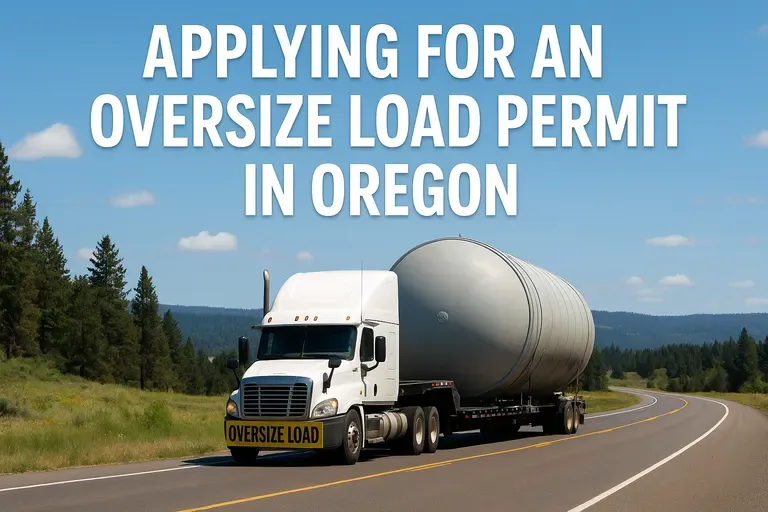
Display “OVERSIZE LOAD” signs at the front and rear of the vehicle.
-
Use required warning lights and flags.
-
Follow all route restrictions and travel times.
Non-compliance may lead to fines or revocation of permit privileges.
9. Keep Records
Maintain copies of all permits, routes, and escort documentation for at least one year.
Keeping good records helps in case of audits or future permit renewals.
10. Key Takeaway
Applying for an Oregon Oversize Load Permit is straightforward when you know the steps.
Using www.oregontruckingonline.org, preparing accurate vehicle data, and following ODOT safety rules ensure smooth and legal transportation across the state.