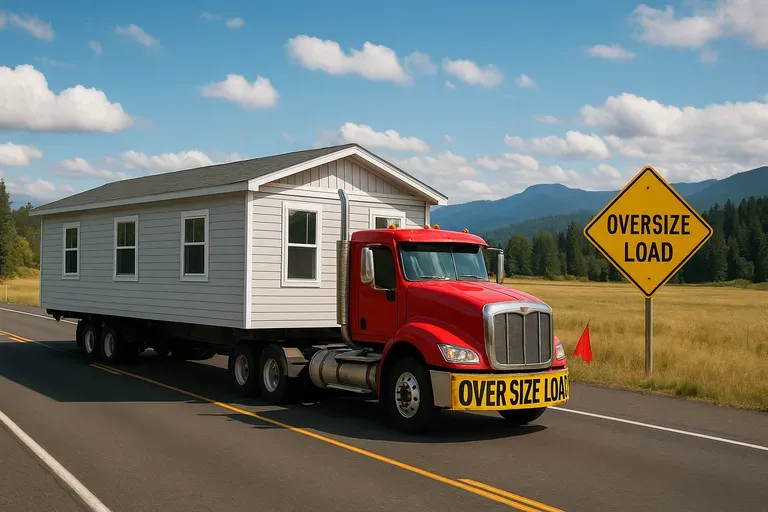
What Is a Single-Trip Permit?
A Single-Trip Permit authorizes a one-time move for a specific vehicle and load combination between two points on a designated route.
Key Features:
-
Valid for one trip only (usually up to 10 consecutive days)
-
Covers a single load — such as a heavy piece of equipment, construction materials, or a modular section
-
Must specify exact origin, destination, and route
-
May require escort vehicles for oversize loads
-
Issued quickly through Oregon Trucking Online or by phone through the ODOT permit office
Common Uses:
-
Moving construction machinery to a new job site
-
Transporting manufactured homes or modular buildings
-
Hauling agricultural or industrial equipment that exceeds weight or size limits
Cost:
Typically $80–$300 per trip, depending on load type and dimensions.
What Is a Continuous (Annual) Permit?
A Continuous Permit, also known as an Annual Permit, authorizes repeated movement of loads within Oregon over a 12-month period under defined conditions.
Key Features:
-
Valid for one year from the issue date
-
Allows unlimited moves of loads that stay within specific size/weight thresholds
-
Simplifies recurring transport operations
-
Provides statewide or regional coverage for approved routes
-
Ideal for fleets moving similar loads regularly
Common Uses:
-
Hauling logs, lumber, or agricultural commodities
-
Construction companies with frequent equipment moves
-
Utility or service trucks carrying consistent oversize materials
Cost:
Usually $1000–$3000 annually, depending on the type of continuous permit and vehicle weight.
Major Differences Between Single-Trip and Continuous Permits
| Feature | Single-Trip Permit | Continuous (Annual) Permit |
|---|---|---|
| Purpose | One-time move | Repeated moves over a year |
| Validity Period | Up to 10 days | 12 months |
| Route Flexibility | Specific route | Pre-approved routes statewide |
| Best For | Irregular or unique hauls | Frequent or ongoing operations |
| Cost | Low upfront, per trip | Higher upfront, long-term savings |
| Processing Time | Quick, per move | One-time annual approval |
| Escort Rules | Based on load size | Pre-determined for approved routes |
Choosing the Right Permit
When deciding between a Single-Trip and Continuous Permit, consider:
-
Frequency of moves: Occasional hauls → Single-Trip; Regular routes → Continuous
-
Load type: Unique or variable loads → Single-Trip; Standardized loads → Continuous
-
Cost efficiency: If you move frequently, an annual permit quickly pays for itself.
How to Apply
Both permits can be applied for through:
-
Oregon Trucking Online : https://www.oregontruckingonline.org/
-
Permit Office: 503-386-4187 (for phone applications)
You’ll need:
-
Vehicle and carrier details
-
USDOT or Oregon Weight-Mile Tax account number
-
Load dimensions, weight, and route information
Compliance Tips
-
Always carry a copy of your permit in the vehicle.
-
Follow route and travel time restrictions, especially for oversize loads.
-
Check weather advisories — certain conditions may restrict oversize movement.
-
Keep your Continuous Permit updated annually to avoid penalties.
Key Takeaway
In Oregon, the difference between Single-Trip and Continuous Permits comes down to frequency and flexibility.
-
If you move unique, one-time loads, a Single-Trip Permit is ideal.
-
If you operate regularly on similar routes with similar loads, a Continuous Permit saves time, money, and paperwork.
By choosing the right permit type, Oregon truckers can stay compliant, efficient, and ready for any haul.