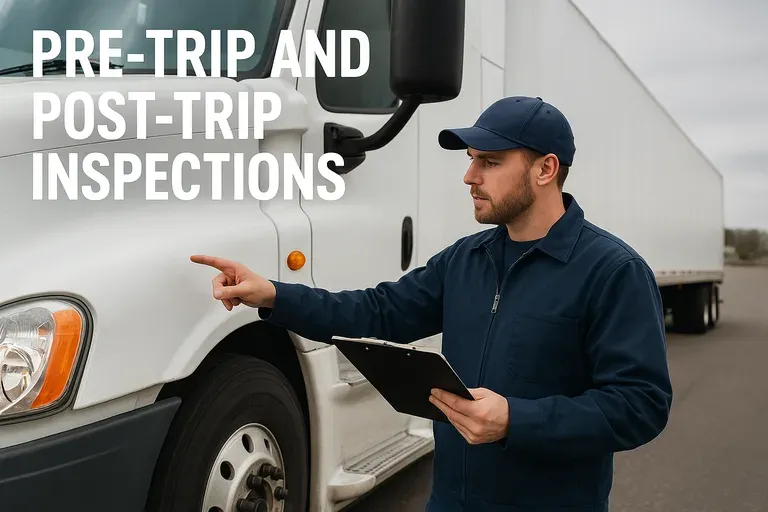
1. Pre-Trip Inspection
A pre-trip inspection is done before the driver starts a trip to ensure the vehicle is safe and legally compliant.
Key Steps
-
Vehicle Overview
-
Walk around the vehicle to check for obvious damage, leaks, or loose parts.
-
Check tires for proper inflation, tread depth, and damage.
-
Ensure lights, reflectors, and license plates are clean and visible.
-
-
Engine Compartment
-
Check engine oil, coolant, power steering, and windshield washer fluid.
-
Inspect belts, hoses, and fuel lines for wear or leaks.
-
Ensure battery connections are tight and secure.
-
-
Cab Check
-
Verify horn, wipers, mirrors, and gauges work properly.
-
Check seat belts for wear and functionality.
-
Review driver logs, registration, insurance, and required permits.
-
-
Brake System
-
Inspect air lines, hoses, and connections.
-
Test parking brakes and service brakes for proper function.
-
Check brake pads or shoes if visible.
-
-
Lights & Electrical
-
Turn on headlights, brake lights, turn signals, hazard lights.
-
Test dashboard warning lights and gauges.
-
-
Trailer (if applicable)
-
Check coupling devices (fifth wheel, kingpin) and locks.
-
Inspect trailer tires, brakes, lights, and reflective tape.
-
Make sure cargo is properly secured.
-
-
Safety Equipment
-
Ensure fire extinguisher, triangles, spare fuses, and PPE are on board.
-
2. Post-Trip Inspection
A post-trip inspection is done after the trip to identify issues that occurred while driving and report them to maintenance.
Key Steps
-
Walk-Around Check
-
Look for leaks, tire damage, and vehicle damage incurred during the trip.
-
Inspect trailer and cargo for shifting or damage.
-
-
Brakes & Suspension
-
Look for air leaks, worn components, or abnormal wear.
-
-
Lights & Reflectors
-
Verify that all lights still function after the trip.
-
-
Fluid Levels & Leaks
-
Inspect engine, transmission, coolant, and other fluids for leaks or low levels.
-
-
Reporting
-
Complete a Driver Vehicle Inspection Report (DVIR) noting any defects.
-
Submit DVIR to maintenance or fleet management promptly.
-
3. Regulatory Notes
-
FMCSA Requirement: Every commercial driver must conduct a pre-trip inspection before driving and a post-trip inspection at the end of their shift.
-
Oregon Compliance: Oregon DOT follows federal FMCSA rules and may perform roadside inspections; DVIRs must be accurate and retained.
✅ Tip: Consistently performing thorough pre- and post-trip inspections reduces accidents, prevents costly repairs, and keeps drivers legally compliant.