Types of Permits
-
Single-Trip Permit – Issued for one-time movements of non-divisible loads exceeding standard limits.
-
Continuous Operation (Annual) Permit – Allows multiple moves of similar loads over a 12-month period.
-
Superload Permit – Required for extremely large loads that exceed standard permit thresholds; includes engineering analysis and route surveys.
-
Variance Permit – Granted for special circumstances, such as unusual equipment or limited travel routes.
Legal Size and Weight Limits
Oregon’s legal maximums before a permit is required:
-
Width: 8 feet 6 inches
-
Height: 14 feet
-
Length: 53 feet for trailers (with exceptions for certain combinations)
-
Gross Vehicle Weight: 80,000 pounds
Any vehicle exceeding these dimensions or axle weights must obtain an ODOT-issued permit.
How to Apply
Permits can be obtained through the www.oregontruckingonline.org
Requirements include:
-
Vehicle and axle information
-
Total weight and dimensions
-
Desired travel route
-
Load description and purpose
Processing Time:
-
Standard permits are typically issued within hours.
-
Superload permits may take several days or weeks due to route evaluations.
Fees:
Based on the type of permit, load size, distance, and duration.
Escort and Pilot Car Rules
For safety, ODOT mandates escort or pilot vehicles for certain oversized loads.
-
One escort may be required for loads over 12 feet wide.
-
Two escorts for very large loads, or when traveling through narrow roads, bridges, or cities.
-
Police escorts are occasionally required for extremely oversized moves.
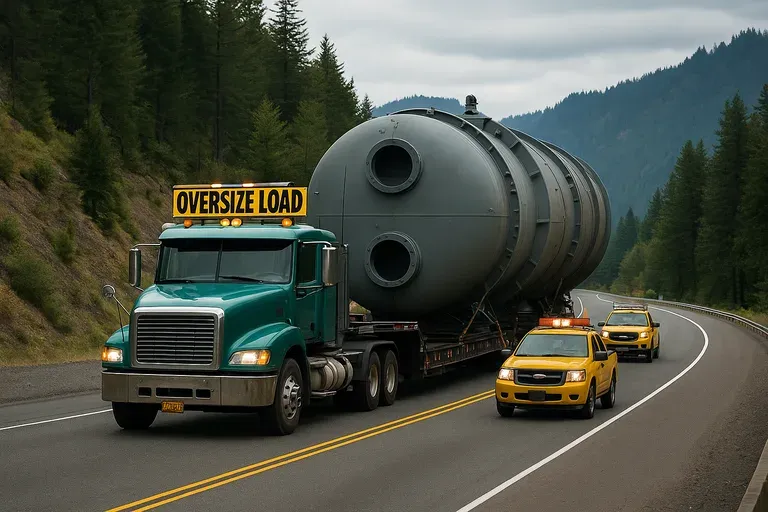
Escort vehicles must meet ODOT’s equipment and lighting standards, including amber lights, flags, and “OVERSIZE LOAD” signs.
Travel Restrictions
-
Travel Hours: Most OS/OW loads may only move 30 minutes before sunrise to 30 minutes after sunset.
-
Weekend & Holiday Restrictions: Limited travel during major holidays or high-traffic weekends.
-
Weather Conditions: Permits are invalid during unsafe weather, such as snow, high winds, or icy roads.
-
Bridge Clearance Checks: Drivers are responsible for verifying vertical clearance on all permitted routes.
Penalties for Non-Compliance
Failure to obtain or follow permit rules can lead to:
-
Fines up to $5,000
-
Suspension of ODOT permit privileges
-
Liability for road or bridge damage
-
Vehicle impoundment for severe violations
Best Practices
-
Plan your route using ODOT’s Route Map and Clearance Database.
-
Verify permit conditions before departure.
-
Maintain clear communication with pilot cars and local authorities.
-
Keep permits in the vehicle and accessible for inspection.
Conclusion
By following Oregon’s OS/OW permitting process, trucking companies can move large loads efficiently while maintaining road safety and infrastructure integrity. ODOT’s streamlined online system and clear regulations make it easier for carriers to operate legally and responsibly across the state.