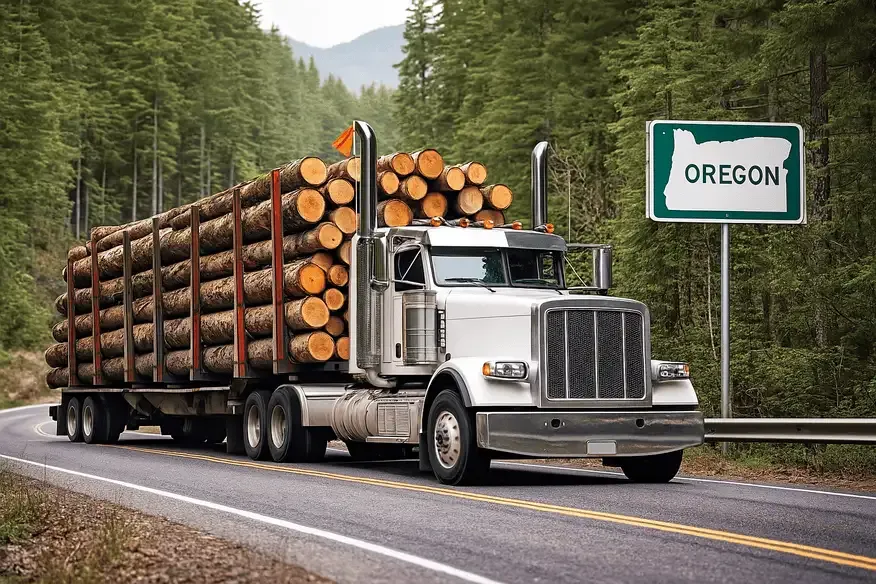
Why Logging Trucks Need Special Permits in Oregon
Logging trucks frequently operate:
-
Overweight due to dense raw timber
-
On steep or restricted forest roads
-
With long, flexible, or uneven loads
-
In remote areas that feed into state highways
To ensure safe travel and protect Oregon’s road infrastructure, the Oregon Department of Transportation (ODOT) regulates forest hauling through special permits and weight allowances.
1. Oregon Forest Product Permit
ODOT issues a Forest Product Permit to allow carriers hauling timber, logs, poles, and similar materials to operate at weights above typical limits.
What it covers:
-
Raw logs
-
Poles
-
Pulpwood
-
Chips
-
Lumber from forest sites
-
Biomass (if associated with timber harvesting)
Benefits:
-
Allows increased axle weight
-
Certain exemptions on weight-mile tax (in specific cases)
-
More flexibility for seasonal hauling
2. Oregon Extended Weight Variance Permit (for Raw Logs)
This permit allows logging trucks to operate at higher weight limits than standard Oregon commercial trucks.
Typical allowances include:
-
Increased legal gross weight
-
Higher axle group allowances
-
Special weight configurations for log trucks
These permits are essential in the timber industry because raw logs are extremely dense and often exceed normal GVW limits.
3. Oregon Heavy Haul Route Permits
Certain logging operations require use of Oregon’s Heavy Haul Corridors, which allow:
-
Higher GVW
-
Increased axle weight limits
-
Longer vehicle combinations
Logging trucks using these corridors must secure appropriate permits documenting:
-
Vehicle configuration
-
Axle spacing
-
Total weight
4. Temporary Permits for Out-of-State Logging Carriers
Carriers entering Oregon without:
-
IRP plates
-
IFTA credentials
must obtain:
Temporary Trip Permit
To operate on Oregon highways legally.
Temporary Fuel Permit
For fuel tax compliance if the carrier is not IFTA licensed.
Many Washington, Idaho, Nevada, and California timber carriers use these when hauling into Oregon mills.
5. Oregon Special Permit for Long Logs
Some hauling operations require extra-long bunks or extended trailers for transporting long logs.
This often triggers:
-
Length exemptions
-
Route-specific approval
-
Safety equipment requirements
6. Requirements for Safety Equipment on Logging Trucks
Logging trucks in Oregon must follow strict safety rules, including:
-
Load securement with approved chains or binders
-
Binders placed at regulated intervals
-
Secure log cradle or bunk system
-
Warning lights for rear overhang
-
Flags for daytime extended-load operations
-
Clearly visible license plates even with protruding logs
For certain oversized loads, escorts may be required.
7. Overhang Rules for Logs
Because logs can extend significantly beyond the trailer, Oregon has specific overhang regulations:
-
Rear overhang allowed beyond 4 feet must be flagged
-
Nighttime overhang requires lights
-
Extremely long overhangs may need a permit or restricted route
8. Route Restrictions and Forest Road Requirements
Logging trucks often use a combination of:
-
Federal forest roads
-
State-managed roads
-
County-maintained timber routes
Restrictions may apply to:
-
Bridge weight limits
-
Gravel or unpaved road conditions
-
Seasonal fire or weather closures
-
Steep grade roads
Some counties require their own logging permits for non-state roads.
9. Oregon Weight-Mile Tax (WMT) for Logging Trucks
Logging carriers may have special rules under Oregon’s WMT program:
-
Some types of forest haul vehicles qualify for exemptions
-
Certain forest product permits reduce WMT liability
-
Configurations with self-loading equipment may be taxed differently
Understanding these exemptions can significantly reduce operating costs.
10. Penalties for Non-Compliance
Running without proper logging permits in Oregon can lead to:
-
Heavy overweight fines
-
Route violations
-
Safety citations
-
Potential out-of-service orders
-
Denial of future permits for repeat offenses
Logging enforcement is active near mills, forest access roads, and state highways.
Conclusion
Logging and timber hauling in Oregon involves a unique set of permit requirements due to the heavy and irregular nature of forest products. Understanding which permits apply—whether the Forest Product Permit, Extended Weight Variance Permit, or Heavy Haul Route Permit—is crucial for compliant and efficient operations.