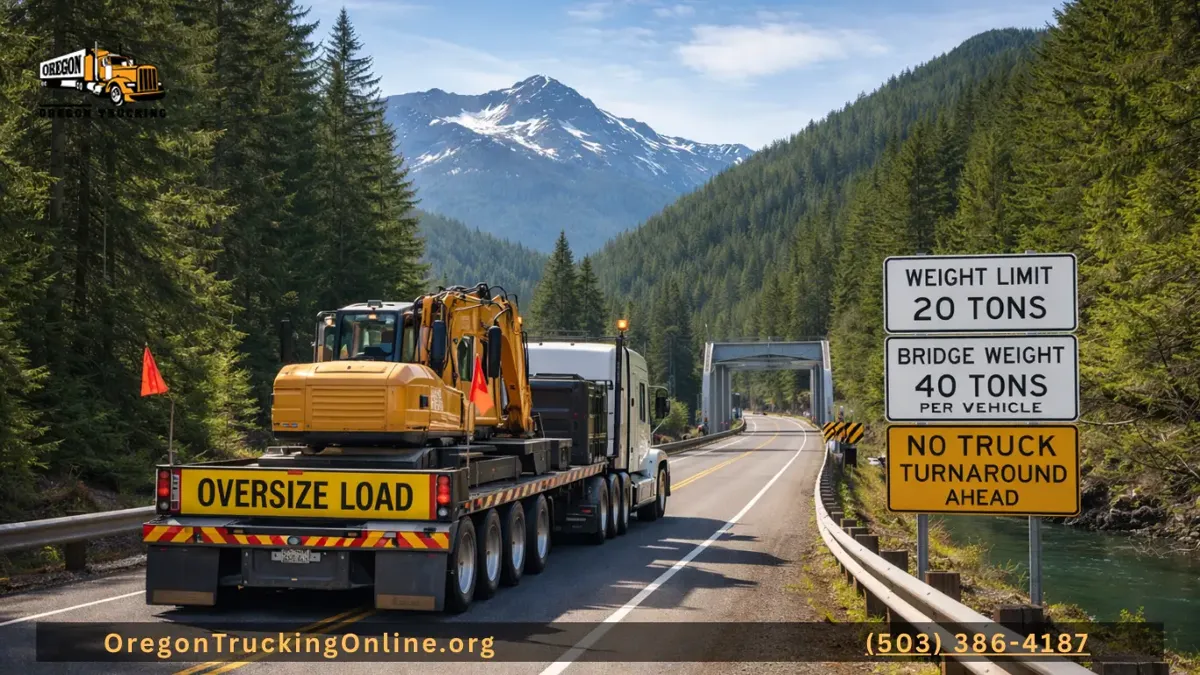
Oregon Truck Permit Guide: Routing Around Weight-Restricted Bridges and Roads
Planning an efficient trucking route in Oregon entails more than simply selecting the fastest highway. The state has numerous weight-restricted bridges, seasonal road limits, and infrastructure regulations that can affect commercial trucks, particularly those transporting heavy or oversized loads. Proper route planning and obtaining the appropriate Oregon truck permit are critical steps toward safe and legal travel.
Understanding Oregon's transportation rules can help trucking companies and owner-operators avoid delays, fines, and unexpected detours.
Understanding Oregon Weight Restrictions
Oregon enforces stringent regulations to protect roads and bridges from excessive wear and structural damage. Many rural roads and older bridges were not designed to handle modern heavy freight traffic, so the Oregon Department of Transportation (ODOT) imposes load restrictions on certain routes.
These restrictions could include:
- Maximum axle weight limits
- Load restrictions specific to the bridge
- Seasonal road limits during spring thaw.
- Limited access routes for oversized vehicles.
If your truck exceeds the legal size or weight limit, you must obtain an Oregon oversize/overweight permit before driving on public roads.
Drivers who do not have the proper permit risk incurring penalties, experiencing delays, and being removed from restricted routes.
Why Efficient Route Planning Matters
Route planning is critical for commercial drivers who transport large or heavy loads. Choosing the wrong road may result in encountering a bridge that cannot support your vehicle's weight.
Proper planning will help you:
- Avoid restricted bridges and roads.
- Reduces fuel consumption and travel time.
- Maintain compliance with Oregon's transportation laws.
- Prevent costly fines and permit violations.
- Improve the overall delivery efficiency.
Many experienced truck drivers use a combination of trucking GPS systems, state freight maps, and permit routing information to stay on approved routes.
The Importance of an Oregon Truck Permit
If your vehicle exceeds Oregon's legal limits, you must obtain an Oregon truck permit to operate legally in the state. These permits outline specific conditions that drivers must comply with, including:
- Approved Travel Routes
- Time-of-day travel restrictions
- Vehicle requirements for the Escort
- Safety signage and lighting rules
An Oregon oversize/overweight permit certifies that your route has been reviewed and approved for heavy freight transportation. This protects infrastructure while allowing trucking companies to transport cargo across the state efficiently.
Why Do Many Truckers Choose Our Permit Services?
Applying for trucking permits can be difficult, especially for drivers who operate in multiple states or transport oversized loads with special routing requirements.
Using a professional permit service significantly simplifies the process. Instead of spending hours navigating regulations and researching restricted bridges, drivers can rely on experts to quickly and accurately obtain the appropriate Oregon truck permit.
Our service enables trucking companies to obtain their Oregon oversize/overweight permit faster while remaining fully compliant with state regulations. We handle the paperwork, verify routes, and help drivers avoid costly permit errors, allowing them to focus on delivering their loads safely and on schedule.
Oregon's highways provide important freight routes throughout the Pacific Northwest, but using them requires careful planning. Weight-restricted bridges, seasonal road conditions, and permit requirements can all pose challenges for truck drivers transporting heavy cargo.