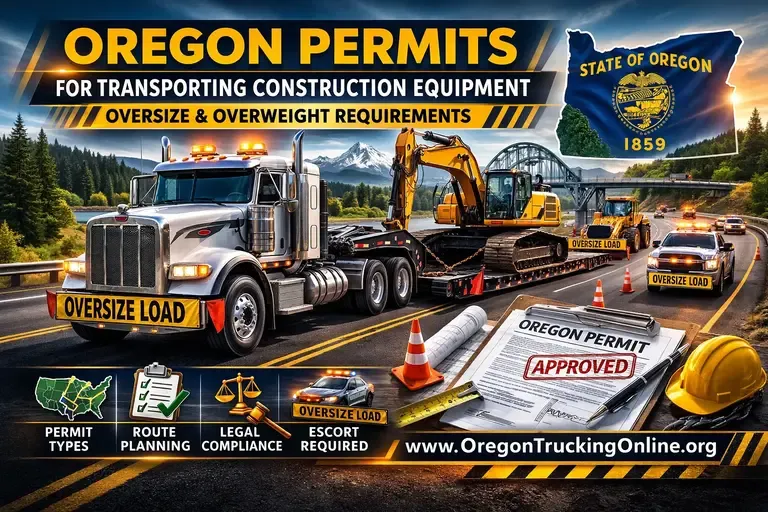
Why Permits Are Required in Oregon
The Oregon Department of Transportation (ODOT) regulates commercial vehicle size and weight to protect public safety and highway infrastructure. Construction equipment often exceeds standard legal limits for:
-
Gross vehicle weight
-
Axle weight
-
Overall width
-
Overall height
-
Overall length
When your load exceeds these limits, you must obtain an oversize and/or overweight permit before entering Oregon highways.
Oregon Legal Size and Weight Limits
Before determining which permit you need, it’s important to understand Oregon’s general legal limits:
Standard Legal Limits (Without Permit)
-
Width: 8 feet 6 inches
-
Height: 14 feet
-
Single axle weight: 20,000 pounds
-
Tandem axle weight: 34,000 pounds
-
Gross vehicle weight: Depends on axle configuration
Most construction equipment exceeds width or weight limits, making permits mandatory in many cases.
Types of Oregon Permits for Construction Equipment
1. Single Trip Permit
A Single Trip Permit allows a vehicle to operate for one specific move between designated points.
Best for:
-
One-time equipment deliveries
-
Job site relocations
-
Out-of-state carriers entering Oregon
2. Annual Oversize/Overweight Permit
An Annual Permit may be available for carriers who frequently transport similar equipment within certain dimensions.
Best for:
-
Contractors with ongoing projects
-
Equipment rental companies
-
Construction fleets operating statewide
3. Continuous Operation Permit
Some qualifying vehicles can operate year-round within specified weight and dimension limits.
When Escort Vehicles Are Required
Pilot cars (escort vehicles) may be required depending on:
-
Width exceeding certain thresholds
-
Height clearance concerns
-
Length over legal limits
-
Route complexity
ODOT determines escort requirements based on the permit type and dimensions of the load.
Route Restrictions and Planning
Transporting heavy construction equipment requires route planning to avoid:
-
Low bridges
-
Restricted highways
-
Seasonal weight limits
-
Construction zones
Certain Oregon highways may have additional restrictions, especially during winter months or in mountainous areas.
Additional Requirements for Construction Equipment Hauling
When transporting construction equipment in Oregon, you may also need:
-
Proper load securement (in compliance with FMCSA regulations)
-
Valid IRP registration if operating interstate
-
IFTA credentials for fuel tax reporting
-
Insurance meeting Oregon minimum requirements
Failure to comply can result in fines, out-of-service orders, and permit revocation.
Penalties for Non-Compliance
Operating without the proper Oregon permit can lead to:
-
Substantial fines
-
Detention at roadside inspections
-
Required load adjustments
-
Delays impacting project timelines
Compliance is not optional — it’s essential for legal and safe operation.
How to Apply for Oregon Construction Equipment Permits
You can apply for Oregon oversize and overweight permits through www.oregontruckingonline.org . The process typically involves:
-
Providing vehicle and load dimensions
-
Submitting axle spacing and weight details
-
Specifying route information
-
Paying applicable permit fees
Permit approval times may vary depending on load complexity and route review.
Best Practices for Smooth Permit Approval
-
Measure equipment accurately before applying
-
Verify axle weights and spacing
-
Confirm total loaded height
-
Plan your route in advance
-
Apply early to avoid delays
Working with a professional permit service can simplify the process and reduce errors.
Final Thoughts
Transporting construction equipment in Oregon requires strict adherence to size, weight, and routing regulations. Whether you need a single trip or annual permit, ensuring compliance with Oregon Department of Transportation guidelines protects your business from fines and operational disruptions.
Before your next move, confirm your equipment dimensions, review Oregon’s legal limits, and secure the proper permits to keep your project on schedule and your operation compliant.