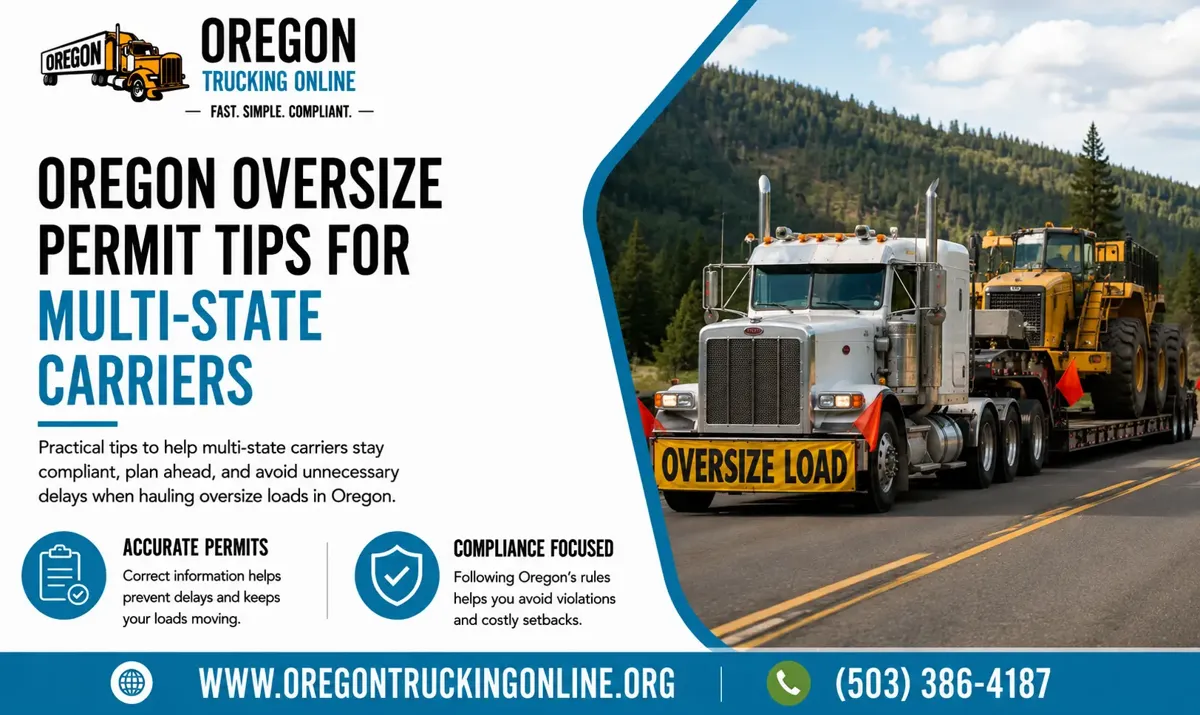
Oregon Oversize Permit Tips For Multi-State Carriers
Table Of Contents
-
Introduction
-
Understand Oregon's Oversize Permit Requirements
-
Plan Your Route Carefully
-
Verify Vehicle And Load Information
-
Keep Required Documents Organized
-
Prepare Drivers Before Every Trip
-
Communicate With Your Dispatch Team
-
Review Permit Conditions Before Entering Oregon
-
Why Many Trucking Companies Choose Our Service
-
FAQ
Introduction
Transporting oversize loads through multiple states requires more than careful driving. Every state has its own permitting requirements, travel restrictions, and documentation standards that carriers must follow. Oregon is no exception. Whether your company frequently hauls oversized equipment or only occasionally includes Oregon in a multi-state route, taking time to prepare before entering the state can help prevent unnecessary delays and compliance issues.
Successful carriers understand that obtaining an Oregon Oversize Permit is only one part of the process. Drivers, dispatchers, and fleet managers should work together to verify permit information, review approved routes, and organize required documentation before the trip begins. Establishing a consistent preparation process helps improve efficiency and allows drivers to focus on delivering their loads safely.
The following tips can help multi-state carriers prepare for oversize operations in Oregon and support smoother transportation throughout the state.
Understand Oregon's Oversize Permit Requirements
Although many states issue oversize permits, their requirements are not identical. Assuming that Oregon follows the same rules as neighboring states can create avoidable compliance problems.
Before scheduling a trip, review the Oregon Oversize Permit carefully and confirm that the authorized vehicle dimensions, travel dates, and operating conditions match the planned movement. Understanding the permit before departure allows carriers to identify potential issues early and make corrections before the vehicle enters Oregon.
Taking a few extra minutes to review permit details can help reduce administrative errors and improve overall trip planning.
Plan Your Route Carefully
Route planning is especially important for multi-state carriers because road restrictions often vary from one state to another.
Before dispatching the load, review the approved Oregon route and verify that it aligns with the overall trip plan. Consider factors such as construction projects, bridge restrictions, road closures, weather conditions, and delivery schedules.
Planning also gives drivers a better understanding of where they can safely stop for fuel, inspections, and required breaks. A well-organized route helps minimize unexpected delays and keeps operations running efficiently.
Verify Vehicle And Load Information
Accurate vehicle information is essential when applying for an Oregon Oversize Permit.
Before submitting an application, confirm information such as:
-
Vehicle dimensions
-
Gross vehicle weight
-
Axle configuration
-
License plate number
-
Vehicle Identification Number (VIN), when applicable
-
Load dimensions
Providing complete and accurate information helps reduce processing delays and ensures the permit reflects the vehicle that will actually be operating in Oregon.
Fleet managers should also verify that the correct vehicle has been assigned before dispatching the trip.
Keep Required Documents Organized
Drivers should know exactly where important documents are stored before beginning their trip.
Common documents include:
-
Oregon Oversize Permit
-
Vehicle registration
-
Driver's license
-
Proof of insurance
-
Shipping documents
-
Any additional permits required for the route
Organizing these documents in advance allows drivers to respond more efficiently during roadside inspections and helps reduce unnecessary delays.
Many trucking companies use standardized document folders or electronic document management systems to make paperwork easier to locate throughout the trip.
Prepare Drivers Before Every Trip
Even experienced drivers benefit from reviewing permit information before transporting an oversize load.
Before departure, discuss the approved route, permit conditions, travel schedule, and any special instructions listed on the permit. Drivers should understand where documentation is stored and know who to contact if unexpected situations arise during the trip.
Regular pre-trip preparation also helps ensure that drivers remain familiar with company procedures and Oregon-specific operating requirements.
Providing consistent guidance before every trip can improve confidence and support safer operations.
Communicate With Your Dispatch Team
Strong communication between dispatchers and drivers plays an important role in successful oversize transportation.
Before entering Oregon, both parties should review the route, expected arrival times, permit conditions, and any planned stops. Throughout the trip, drivers should immediately report route changes, weather delays, mechanical issues, or other situations that could affect the permitted movement.
Maintaining regular communication allows carriers to respond quickly when adjustments become necessary and helps prevent small issues from becoming larger operational problems.
Review Permit Conditions Before Entering Oregon
A final permit review before crossing into Oregon can help identify overlooked details before they become compliance concerns.
Confirm that:
-
Travel dates are correct.
-
Vehicle information matches the assigned equipment.
-
Load dimensions remain accurate.
-
The approved route has not changed.
-
Drivers have all required documentation.
Following a standardized checklist before every trip helps create consistency throughout the fleet and reduces the likelihood of administrative mistakes.
For carriers operating across multiple states, establishing a repeatable permit review process can save time while supporting safe and compliant transportation.
Why Many Trucking Companies Choose Our Service
Managing oversize permits across multiple states can become challenging when each jurisdiction has different requirements and application procedures. Oregon Trucking Online helps trucking companies obtain Oregon Oversize Permits, Overweight Permits, Trip Permits, Fuel Permits, and other trucking credentials through a simple online application process. Our experienced team carefully reviews every application to help reduce common mistakes, improve processing efficiency, and provide responsive customer support throughout the permitting process.
Whether you operate a single truck or manage a growing fleet, our goal is to simplify permit management so your drivers have the credentials they need before entering Oregon. By focusing on accuracy, dependable service, and efficient processing, we help carriers spend less time managing paperwork and more time keeping freight moving.
Submit your permit application today.
FAQ
Why should multi-state carriers review an Oregon Oversize Permit before departure?
Reviewing the permit helps verify that travel dates, vehicle information, and authorized routes are accurate before the trip begins.
What documents should drivers carry with an Oregon Oversize Permit?
Drivers should generally carry the oversize permit, vehicle registration, driver's license, proof of insurance, shipping documents, and any additional permits required for the trip.
Why is route planning important for oversize loads in Oregon?
Planning the approved route helps carriers prepare for road restrictions, construction, and other conditions that could affect the movement of an oversize load.
How can carriers reduce Oregon Oversize Permit application delays?
Submitting accurate vehicle and load information, reviewing applications carefully, and confirming supporting documentation before submission can help reduce delays.
How does communication improve oversize operations?
Regular communication between drivers and dispatchers helps carriers respond quickly to changing conditions, maintain compliance, and keep deliveries on schedule.
For more information, visit the Oregon Department of Transportation Commerce and Compliance Division.