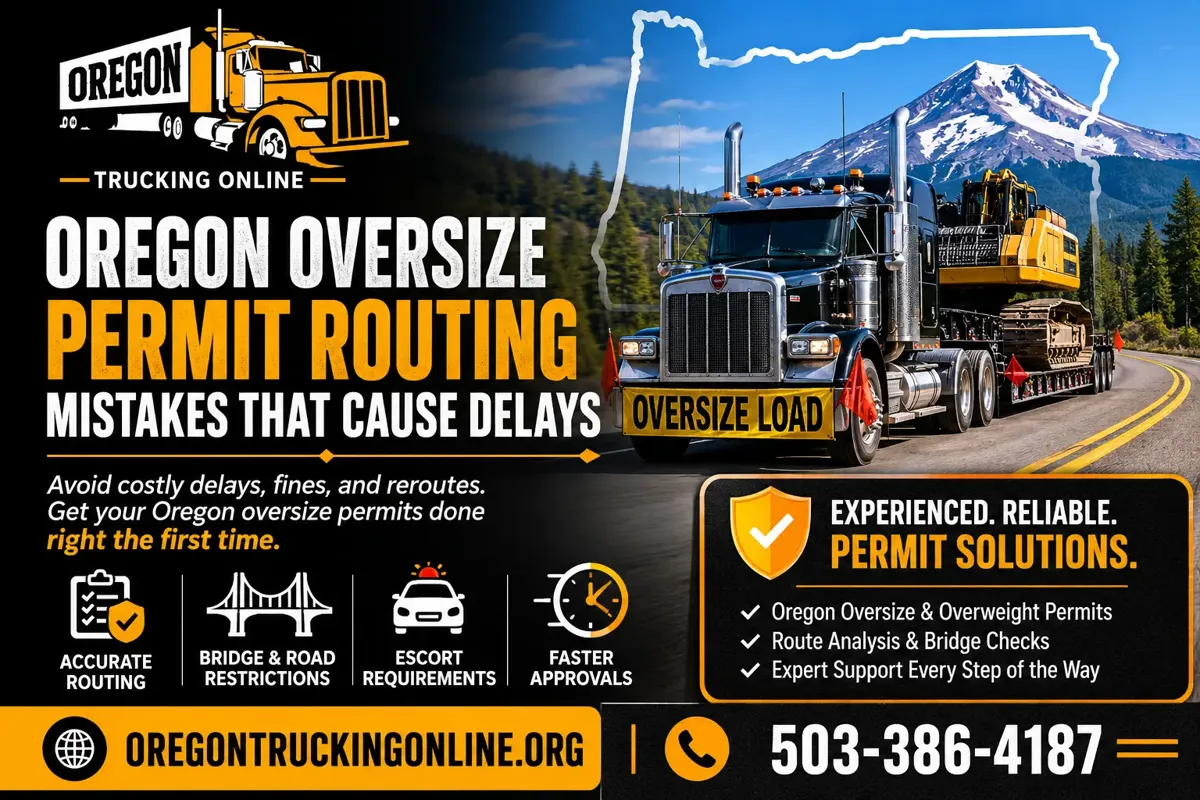
Transporting oversized loads through Oregon requires careful planning, accurate paperwork, and approved travel routes. Even small routing mistakes can create major delays, increase operating costs, and lead to compliance violations. Many trucking companies and owner-operators underestimate how strict Oregon oversize permit requirements can be until a route issue interrupts the trip.
Incorrect Route Selection Can Lead To Permit Rejections
One of the most common mistakes trucking companies make is choosing routes that are not approved for oversized travel. Oregon has specific highway restrictions based on load dimensions, bridge capacities, road construction, and seasonal conditions. Submitting an oversized permit application with an incorrect route often results in delays while corrections are made.
Truckers also face problems when relying solely on standard GPS systems. Most consumer navigation apps do not account for height restrictions, bridge limitations, or oversize travel regulations. A route that appears shorter may actually be prohibited for heavy haul transportation.
Bridge Restrictions Often Cause Unexpected Delays
Bridge weight limitations are another major issue for oversize carriers operating in Oregon. Some routes may appear open but contain bridges that cannot safely support certain axle weights or configurations. If a bridge restriction is overlooked during permit planning, the carrier may need to reroute the shipment entirely.
Unexpected rerouting increases fuel costs, travel time, and scheduling complications. In some situations, loads may even be temporarily stopped until a new approved route is issued.
Construction Zones And Seasonal Restrictions Matter
Oregon road construction projects frequently affect oversize permit routing. Temporary lane closures, detours, and reduced travel widths can make previously approved routes unavailable. Seasonal weather conditions in mountain regions can also impact oversize travel approvals.
Failing to monitor changing road conditions may result in denied travel authorization or unexpected roadside delays. Keeping up with current Oregon transportation restrictions is essential for smooth operations.
Missing Escort Requirements Creates Compliance Problems
Certain oversized loads require pilot cars or escort vehicles, depending on load dimensions and route conditions. Trucking companies sometimes overlook these requirements when planning routes, which can delay travel approval or lead to enforcement issues during transport.
Proper route analysis helps determine when escorts, curfews, or restricted travel hours apply to the shipment.
Why Many Trucking Companies Choose Our Service
Many trucking companies choose Oregon Trucking Online because we simplify the oversize permit process and help reduce costly routing mistakes. Our team understands Oregon permit regulations, route restrictions, and compliance requirements that can delay shipments.
We help trucking companies secure accurate oversize permits quickly while reviewing routes carefully for bridge restrictions, construction zones, escort requirements, and travel limitations. Instead of risking permit errors and unexpected delays, carriers can rely on experienced support designed to keep loads moving efficiently.