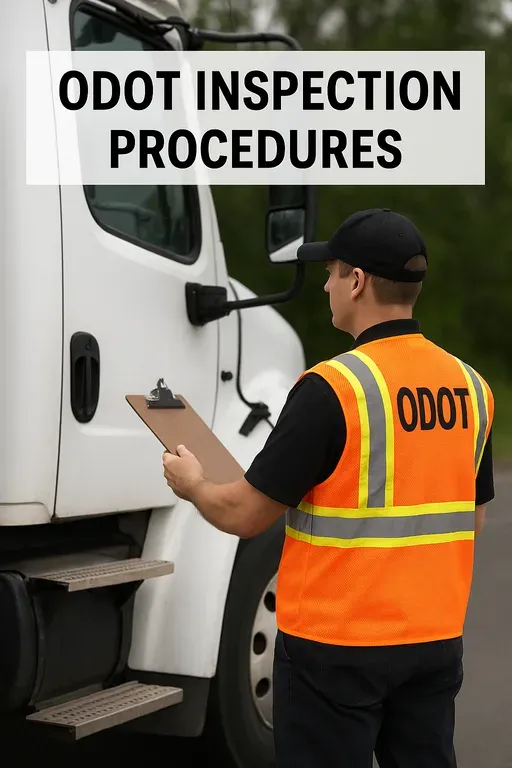
1. Inspection Levels & Standards
-
Oregon uses the Commercial Vehicle Safety Alliance (CVSA) “North American Standard” inspection levels (Level I, II, III, V, etc.).
-
Level I = Full inspection: driver + vehicle, mechanical + driver qualifications.
-
Level II = “Walk-around” inspection: many of same items, but no underneath access.
-
Level III = Driver-only: e.g., driver credentials, hours-of-service, etc.
-
Level V = Vehicle only: mechanical components only (no driver).
-
-
Under Oregon administrative rules, only Level I and Level V inspections may result in an Oregon Commercial Vehicle Inspection Decal.
2. Who Conducts the Inspections & Inspector Qualifications
-
Inspectors must be certified. According to Oregon rules (OAR 740-100-0015), an inspector either:
-
Works for a state agency (ODOT) or is under contract with ODOT, AND
-
Has completed the required commercial vehicle safety inspector training, AND
-
Annually performs the minimum number of North American Standard inspections required by the Federal Motor Carrier Safety Administration (FMCSA).
-
-
ODOT’s Commerce & Compliance Division oversees training and certification of truck-safety inspectors in Oregon.
3. What’s Checked During an Inspection
For Level I (full inspection), ODOT lists the following typical checks:
-
Driver credentials: driver’s license, medical examiner certificate/waiver, drug & alcohol compliance.
-
Vehicle mechanical/operational components:
-
Brakes, coupling devices, steering, suspension, tires/wheels/rims.
-
Lights (headlamps, tail, turn signals), exhaust/fuel systems, frame, load securement.
-
-
Out-of-Service criteria: If defects are serious, vehicle or driver may be placed out-of-service under North American Standard criteria.
4. Decals, Reciprocity & Re-inspection
-
After a successful Level I or Level V inspection, the vehicle may be issued an Oregon Commercial Vehicle Inspection Decal.
-
Vehicles displaying a valid decal generally are exempt from re-inspection, unless a defect is obvious. (Oregon Rule 740-100-0055)
-
Inspections conducted by other jurisdictions (states) that follow the same standards may be given “reciprocity” in Oregon.
5. Inspection Results, Violations & Compliance
-
If violations are found, the carrier or driver must correct them. ODOT requires notification and follow-up.
-
Inspections feed into carrier safety profiles and may affect enforcement action or audits.
-
Carriers must also maintain inspection records, ensure vehicles are safe, and comply with both state and federal rules (e.g., the FMCSA periodic inspection regulations).
6. Preparing for an Inspection: Best Practices
To minimise disruptions and avoid violations:
-
Keep driver credentials, logs, and medical certificates up to date.
-
Perform regular pre-trip and post-trip inspections (driver-led walk-arounds).
-
Maintain vehicle mechanical systems: brakes, lights, tires, coupling, suspension.
-
Ensure load securement is adequate and compliant.
-
Track when the annual/periodic inspection is due (for vehicle + trailer).
-
Know whether your vehicle displays a valid decal; if nearing expiry, schedule inspection.
-
If pulled into a roadside inspection, stay cooperative, have documents ready, and follow any out-of‐service instructions.
7. Key Regulations & Legal Basis
-
Oregon administrative rules under Chapter 740 establish inspection procedures, decal rules, out-of-service criteria, inspector certification.
-
Federal rules (FMCSA) set baseline inspection and maintenance requirements (49 CFR part 396) which Oregon aligns with.