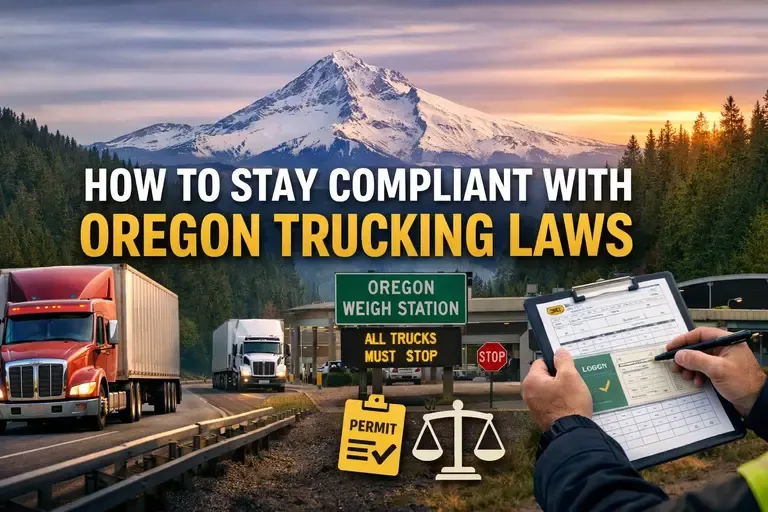
1. Register Properly Before Entering Oregon
Most commercial carriers must complete Oregon’s registration requirements before operating in the state, including:
-
Oregon Weight-Mile Tax via https://www.oregontruckingonline.org/
-
Temporary or annual trip permits for out-of-state carriers
-
Proper USDOT and FMCSA authority
Operating without these can result in immediate penalties at the first weigh station.
2. Understand Weight and Size Limits
Oregon enforces strict:
-
Gross vehicle weight limits
-
Axle weight restrictions
-
Length, width, and height rules
If your vehicle exceeds legal limits, you must obtain an oversize or overweight permit in advance.
3. Keep Permits in the Truck
Drivers should always have:
-
Trip permits or annual permits
-
Oversize/overweight permits (if applicable)
-
Fuel tax credentials
-
Registration and insurance documents
Inspectors expect these documents to be readily available.
4. Stop at All Weigh Stations
Oregon requires most commercial vehicles to stop at:
-
Ports of entry
-
Weigh stations
-
Mobile enforcement sites
Bypassing a scale is a serious violation and often results in higher fines than paperwork errors.
5. Maintain Accurate Logs and Records
Ensure:
-
ELDs are functioning properly
-
Hours-of-service logs are current
-
Vehicle inspection reports are completed
-
Weight-mile records are accurate
Oregon inspectors frequently audit these during roadside checks.
6. Train Drivers on Oregon-Specific Rules
Your drivers should know:
-
When to stop at scales
-
How to present permits
-
Oversize travel time restrictions
-
Escort vehicle requirements
Well-trained drivers prevent costly mistakes.
7. Renew and Update on Time
Track expiration dates for:
-
Weight-mile accounts
-
Trip permits
-
Oversize/annual permits
-
Insurance filings
Late renewals can make your truck instantly non-compliant.