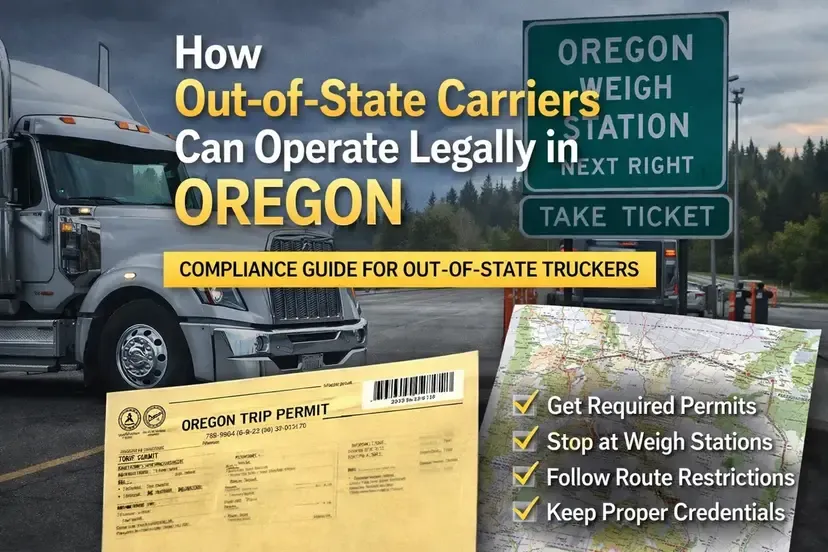
1. Understand Oregon’s Weight-Mile Tax (WMT)
Oregon does not charge a traditional fuel tax for heavy trucks. Instead, it uses the Oregon Weight-Mile Tax, which applies to:
-
Trucks with a GVW over 26,000 lbs
-
Any vehicle hauling a load for compensation
Options to comply:
-
Enroll in the Oregon Weight-Mile Tax program
-
Purchase a temporary Oregon Trip Permit if entering occasionally
2. Obtain an Oregon Trip Permit (If Required)
Out-of-state carriers without Oregon registration must obtain a temporary trip permit:
-
Valid for 10 consecutive days
-
Required for vehicles 26,001 lbs or more
-
Covers weight-mile tax and registration compliance
Trip permits are ideal for short-term or infrequent travel in Oregon.
3. Register Under UCR (Unified Carrier Registration) at https://www.fmcsa.me/
If you operate in interstate commerce, you must be:
-
Properly registered under UCR at https://www.fmcsa.me/
-
Paid up for the current registration year
Oregon actively enforces UCR compliance at weigh stations.
4. Comply with IRP and IFTA (If Applicable)
Depending on your operation:
-
IRP (International Registration Plan) may be required for apportioned plates
-
IFTA fuel tax reporting applies if your vehicle meets qualification standards
Note: Even with IFTA, Oregon’s WMT still applies.
5. Secure Oversize or Overweight Permits (If Needed)
If your load exceeds legal limits, you must obtain:
-
Oversize permits (width, height, length)
-
Overweight permits
These permits may include:
-
Route restrictions
-
Escort vehicle requirements
-
Travel time limitations
6. Follow Oregon Route & Travel Restrictions
Oregon enforces:
-
Bridge and road weight limits
-
Seasonal load restrictions
-
Holiday and curfew travel bans for permitted loads
Always verify your approved route before entering the state.
7. Stop at Oregon Weigh Stations
Out-of-state carriers must:
-
Stop at open weigh stations
-
Present permits, trip documents, and credentials
-
Comply with inspections and enforcement checks
Failure to stop can result in severe penalties.
8. Keep Required Documents in the Vehicle
Make sure drivers carry:
-
Oregon Trip Permit or WMT account info
-
UCR proof
-
IRP & IFTA credentials (if applicable)
-
Oversize/overweight permits
-
Bill of lading and insurance
9. Know the Penalties for Non-Compliance
Operating illegally in Oregon can lead to:
-
Costly fines
-
Back taxes and penalties
-
Vehicle being placed out of service
-
Delays that impact delivery schedules
Final Tip
Oregon’s trucking laws are stricter and more unique than most states. Planning ahead and securing the correct permits before entering Oregon is the best way to stay legal and keep freight moving smoothly.
https://www.oregon.gov/odot/mct/pages/oregon-motor-carrier-requirements.aspx