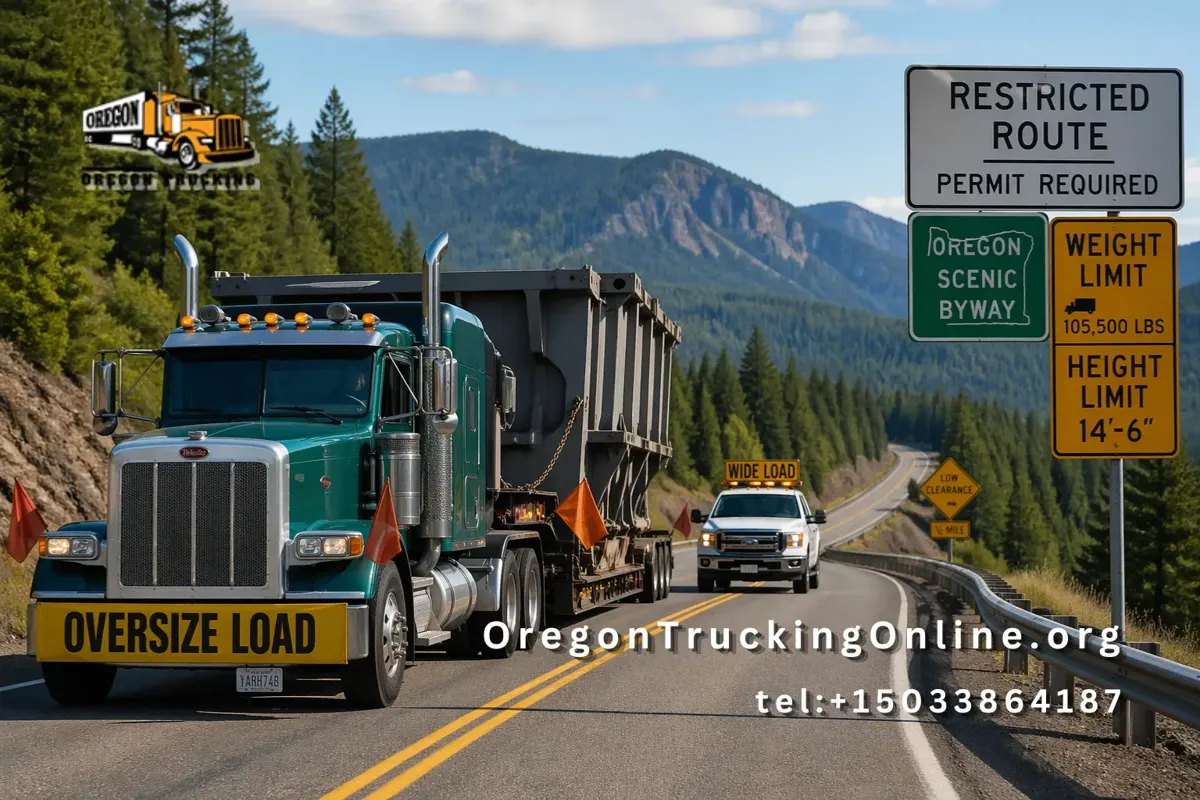
Why Routing Restrictions Matter for Truckers
For Oregon truckers, routing restrictions are crucial rules that determine exactly how and when their vehicles travel across the state. Oversized and overweight loads require precise permit-approved routes that must be followed without deviation.
These routes protect roads, avoid low-clearance hazards, and reduce traffic issues. Poor planning can delay deliveries.
Common Routing Challenges in Oregon
Truckers operating in Oregon frequently encounter restrictions such as the following:
- Limited bridge weight capacities
- Roads with low overhead clearance
- Urban zones with tight turns or restricted access
- Seasonal limitations on certain rural or logging routes
Drivers often take longer routes, adding extra miles and time.
How Routing Restrictions Affect Delivery Schedules
Routing limits can slow deliveries by the following:
- Longer travel distances due to detours
- Restricted travel hours, especially in busy metro areas
- Permit approval delays if routes are not correctly planned.
Even minor routing mistakes mean missed windows, unhappy customers, and higher costs.
Cost Implications for Truckers
Inefficient routes waste time and money. More miles mean more fuel. Delays cause detention fees and pressure on driver hours.
Smart, proactive planning is your secret weapon. Avoid costly detours before they start by preparing every route in advance.
Why Many Truckers Choose Our Service
Truckers use Oregon Trucking Online to keep routes accurate and stay on schedule.
Here's what sets the service apart:
- Fast and accurate permit processing to avoid delays
- Expert route planning tailored to Oregon's restrictions
- Up-to-date knowledge of changing state regulations
- Reliable support that helps prevent costly mistakes
Instead of handling complex requirements on their own, truckers can rely on a streamlined process that keeps deliveries moving efficiently.
Plan Smarter to Stay on Schedule
Plan for routing restrictions to succeed in Oregon. Use permit services and check routes early to minimize delays and stay on track.
For official guidelines, visit the Oregon Department of Transportation.