How GPS And ELD Data Can Improve Oregon Weight-Mile Tax Reporting
Table Of Contents
-
Introduction
-
Understanding Oregon Weight-Mile Tax Reporting
-
How GPS And ELD Data Can Improve Oregon Weight-Mile Tax Reporting
-
Best Practices For Using GPS And ELD Data
-
Why Accurate Mileage Records Matter
-
Why Many Trucking Companies Choose Our Service
-
FAQ
Introduction
Accurate mileage reporting is one of the most important responsibilities for carriers participating in the Oregon Annual Weight-Mile Tax Program. Every mile traveled on Oregon public highways contributes to reporting obligations, making reliable recordkeeping essential for maintaining compliance.
As fleets become more technology-driven, many trucking companies are turning to Global Positioning System (GPS) technology and Electronic Logging Devices (ELDs) to simplify their daily operations. These systems do much more than assist with navigation or Hours of Service compliance. When used effectively, they can also help improve mileage tracking, organize operational records, and support more accurate Weight-Mile Tax reporting.
Although technology does not replace a carrier's responsibility to maintain accurate records, it can significantly reduce manual data entry and improve consistency across an entire fleet. Companies that integrate GPS and ELD information into their reporting processes often spend less time organizing mileage records while improving overall operational efficiency.
This guide explains how GPS and ELD data can support Oregon Weight-Mile Tax reporting, why accurate mileage records are important, and practical ways carriers can improve their reporting process.
Understanding Oregon Weight-Mile Tax Reporting
The Oregon Annual Weight-Mile Tax Program requires qualifying commercial vehicles to report taxable mileage traveled on Oregon highways. Accurate reporting depends on maintaining complete operational records throughout each reporting period.
Mileage records form the foundation of every Weight-Mile Tax report. Carriers must consistently track vehicle movement and organize supporting documentation so reporting can be completed accurately and efficiently.
As fleets expand, manual mileage tracking becomes increasingly difficult. Multiple vehicles, changing routes, temporary drivers, and varying delivery schedules can all make recordkeeping more complicated.
For this reason, many carriers rely on technology to improve the accuracy and consistency of their reporting process while reducing administrative workload.
How GPS And ELD Data Can Improve Oregon Weight-Mile Tax Reporting
GPS and ELD systems provide valuable operational information that can support more organized mileage reporting.
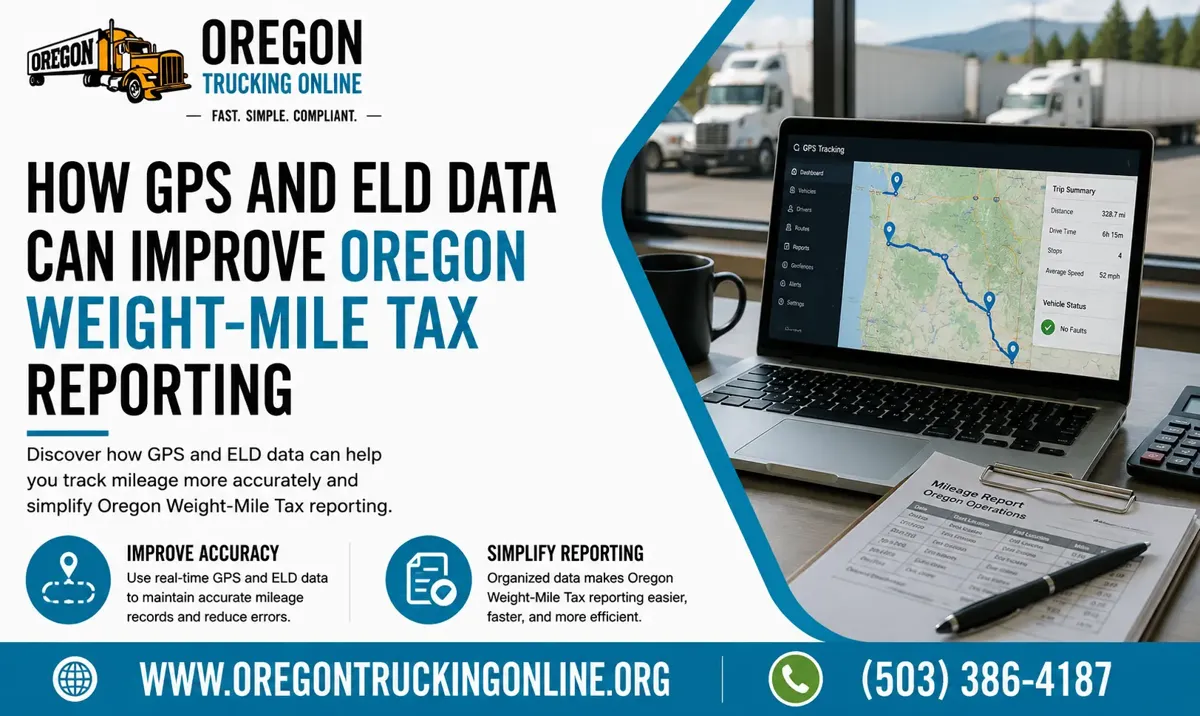
GPS technology continuously records vehicle movement, helping fleet managers monitor routes, identify travel locations, and review completed trips. This information can simplify the process of organizing mileage records throughout the reporting period.
ELDs also contribute by automatically recording driving activity, making it easier to maintain consistent operational records across multiple vehicles. Although ELDs are primarily designed to support Hours of Service compliance, the information they collect can also complement mileage tracking efforts.
For example, a fleet manager reviewing monthly Oregon operations can compare GPS route information with ELD driving records and internal dispatch reports to ensure vehicle activity has been properly documented. Using multiple record sources helps identify discrepancies before reports are prepared.
Technology can also improve communication between dispatchers, drivers, and accounting personnel. When everyone works from consistent operational data, preparing Weight-Mile Tax reports becomes more efficient and less dependent on manual record collection.
Rather than waiting until reporting deadlines approach, reviewing GPS and ELD information throughout the reporting period helps carriers maintain organized records and reduce last-minute administrative work.
Best Practices For Using GPS And ELD Data
Technology delivers the greatest value when supported by consistent internal procedures.
Fleet managers should regularly review GPS and ELD information to ensure records remain complete and accurate. Identifying inconsistencies early allows companies to resolve potential reporting issues before filing deadlines arrive.
Companies should also establish standardized procedures for storing electronic records. Organizing mileage reports, dispatch information, route histories, and supporting documentation in a consistent manner makes future reporting much easier.
Drivers should understand the importance of accurate operational records and promptly report any equipment issues that may affect GPS or ELD performance. Maintaining open communication between drivers and fleet management helps improve record accuracy.
Businesses should also periodically compare electronic mileage information with dispatch records and other internal documentation. Performing routine internal reviews helps verify that reporting information remains complete throughout the year.
Using technology alongside good recordkeeping practices provides a more reliable reporting process than relying on either approach alone.
Why Accurate Mileage Records Matter
Accurate mileage records benefit every aspect of Oregon Weight-Mile Tax reporting.
Reliable records simplify report preparation, reduce administrative workload, and help companies maintain organized documentation throughout the reporting year. Well-maintained records also make it easier to respond to internal reviews or regulatory questions if they arise.
Accurate mileage information supports better fleet management as well. Companies can review travel patterns, improve operational planning, and identify opportunities to streamline dispatch procedures while maintaining consistent reporting practices.
As fleets continue adopting advanced technology, combining GPS data, ELD records, and organized administrative procedures creates a stronger foundation for long-term compliance.
Consistent recordkeeping ultimately saves time while helping carriers confidently manage their reporting responsibilities.
Why Many Trucking Companies Choose Our Service
Oregon Trucking Online helps carriers manage Oregon Annual Weight-Mile Tax requirements with fast, dependable, and professional assistance. Our experienced specialists help simplify reporting while providing guidance that supports accurate filings and ongoing compliance.
We provide fast processing, 24/7 customer support, weekend and holiday availability, secure online services, competitive pricing, and knowledgeable permit specialists committed to helping your business stay compliant. Whether you need assistance with the Oregon Annual Weight-Mile Tax Program, Trip Permits, Fuel Permits, or other Oregon trucking credentials, our team is ready to help keep your operation moving.
Contact us today to get started.
FAQ
Can GPS systems improve Oregon Weight-Mile Tax reporting?
Yes. GPS systems can help organize mileage records by providing detailed route and travel information that supports accurate reporting.
Do ELDs replace Weight-Mile Tax reporting requirements?
No. ELDs help collect operational data, but carriers remain responsible for maintaining accurate records and submitting complete Weight-Mile Tax reports.
Why should companies review GPS and ELD data regularly?
Routine reviews help identify discrepancies early, making report preparation more accurate and efficient.
Can technology reduce manual mileage tracking?
Yes. GPS and ELD systems can reduce manual recordkeeping by automatically collecting valuable operational information.
How can trucking companies improve Weight-Mile Tax reporting?
Using GPS and ELD data, maintaining organized records, performing regular internal reviews, and working with experienced specialists can help improve reporting accuracy and compliance.
For more information, visit the Oregon Department of Transportation Commerce and Compliance Division.