Key Legal and Regulatory Foundations
-
Under Oregon Department of Transportation (“ODOT”), the hazardous-materials (hazmat) transportation rules adopt and align with the federal regulations (Federal Motor Carrier Safety Administration or FMCSA) in many respects.
-
For example, Oregon Administrative Rules (OAR) 740-110-0010 specify that anyone transporting a hazardous material must comply with the U.S. DOT Hazardous Materials Regulations (49 CFR Parts 107-180) as of a specified effective date.
-
Statutes: Under ORS 824.086, the state defines what materials and quantities are considered hazardous and sets notification requirement. Also ORS 825.258 gives ODOT authority to adopt rules conforming to federal standards for hazardous materials and waste
Responsibilities: Who Does What
Here are the major parties and their typical responsibilities under Oregon & federal hazmat rules:
-
Shipper: Determines proper shipping name, hazard class, identification number (UN/NA number), correct packaging, labelling/marking, placarding. Must prepare shipping papers with required info.
-
Carrier / Trucking Company: Ensures vehicle, driver, equipment comply with hazmat rules (including training, placards, routing, documents). Comply with state routes/restrictions.
-
Driver: If operating a commercial motor vehicle transporting hazardous materials (when placarding or certain quantities apply), the driver must have the appropriate endorsement (HazMat “H” endorsement) on their CDL, proper training, know how to handle emergencies, and carry required shipping papers.
Key Rule Areas for Trucking HazMat in Oregon
Here are specific areas you need to pay attention to:
1. Placarding & Marking
-
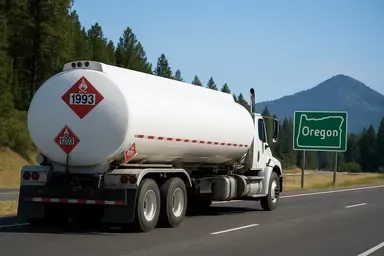
If a vehicle is transporting certain quantities or types of hazardous materials, it must display diamond-shaped placards with hazard class labels.
-
Bulk packaging, cargo tanks, portable tanks must have correct marking (e.g., identification number, specification markings) and shipping papers must clearly describe the materials.
2. Loading, Unloading & Securement
-
Loading/unloading must be done safely: parking brake set, vehicle secured, containers inspected for leaks/damage, no smoking around flammable hazard classes, etc.
-
Packages must be secured so they will not shift, fall, or be damaged during transport. Hazardous materials cannot be transferred during transit except in approved situations.
3. Driving & Parking Rules
-
There are specific rules for driving/parking when hauling certain hazard classes (e.g., explosives, flammable gases/liquids, radioactive materials). For example:
-
A vehicle transporting Division 1.1/1.2/1.3 explosives may not park within 300 feet of gatherings, bridges, tunnels, etc.
-
Use of flares near certain hazardous cargo is prohibited; instead, use approved warning devices.
-
-
Route restrictions may apply: some states/counties (and Oregon in some cases) restrict or require permits for certain hazmat loads, especially large quantities, explosives, or radioactive materials.
4. Routes, Permits, Notification
-
For certain materials (e.g., radioactive materials), Oregon requires special permits. For example, under OAR Division 110 there are rules for radioactive materials transport/permitting
-
ODOT’s HazMat page indicates carriers transporting radioactive materials must meet state & federal requirements and adhere to route/notice obligations.
5. Penalties & Enforcement
-
Violating these rules can lead to civil penalties: For example, under ORS 825.258, ODOT may impose civil penalties up to $10,000 for each day of non-compliance.
-
Enforcement includes inspections, and carriers/drivers should expect roadside checks of shipping papers, placards, endorsements, etc.
Practical Tips for Truckers & Carriers in Oregon
-
Before hauling hazmat: check the classification of the material, packaging specs, and whether placards are required.
-
Ensure the driver has the proper HazMat endorsement on their CDL if required.
-
Confirm routing: Are there restrictions for your load in the state of Oregon (e.g., tunnels, bridges, local jurisdictions)?
-
Maintain and carry shipping papers, emergency response information, and ensure placards are visible.
-
Train your drivers: They must know how to load/unload properly, handle leaks/spills, know parking rules, and know how to respond to emergencies.
-
Do a vehicle pre-trip inspection tailored for hazmat: Check tires, brakes, placards, securement, any signs of leakage.
-
Be aware of state-specific rules: Even though many adopt federal rules, Oregon has its own administrative rules (e.g., OAR 740-110) and statutes.
-
Have a spill/incident plan: Know how to respond to a release or accident involving dangerous goods — you’ll be held to the standard of safe transport.
-
When in doubt: contact ODOT’s Commerce & Compliance Division (HazMat unit) for clarifications in Oregon. Their website provides guidance.